We deliver end-to-end mobile app development — from initial strategy to post-launch growth. Our teams combine deep technical expertise with industry knowledge to build secure, scalable, and user-centric mobile products.
Types of Mobile App Development Services
It's quite difficult to find a custom app development company that streamlines your engineering process while offering flexible cooperation models and cost-effective cross-platform mobile app development solutions. Thanks to cross-platform mobile solutions, we architect modular applications that maintain 99.9% uptime while accommodating a 300% surge in concurrent sessions.

Native iOS, Android, cross-platform, and hybrid apps — a single development partner for every platform and use case
Native Android Development and Native iOS App Development
Build high-performance iOS applications using Swift and Objective-C, fully optimized for Apple's ecosystem with seamless hardware integration and App Store compliance. Deliver smooth, responsive Android experiences using Kotlin and Java — from smartphones and tablets to foldables and Android TV. We build apps that leverage the full depth of each platform — background services, custom widgets, adaptive layouts, and deep integration with Google Play services.
Cross-Platform Mobile Solutions
Ship faster with a single codebase using React Native or Flutter while maintaining native-like performance across iOS and Android. We architect modular, testable codebases that scale — supporting offline-first architecture, real-time multi-device synchronization, and seamless API integration out of the box. This approach cuts development time by up to 40% compared to maintaining two separate native codebases. We keep data consistent across phones, tablets, and wearables with real-time multi-device synchronization, offline-first architecture, and automatic conflict resolution.
Hybrid Mobile Development
Combine web technologies with native wrappers using the Ionic framework for cost-effective deployment across multiple platforms. Hybrid mobile development is ideal for content-driven apps, internal enterprise tools, and MVPs where speed to market matters most. A single web-based codebase deploys to iOS, Android, and the web simultaneously, reducing maintenance overhead across channels. We build AI-driven mobile personalization engines that deliver intelligent recommendations, adaptive interfaces, and predictive user journeys — all running on-device or in the cloud depending on latency and privacy requirements.
Progressive Web Application Development
Create installable, offline-first web apps that deliver native-like experiences through the browser — no app store required. Our progressive web application development covers service workers, push notifications, background sync, and responsive layouts that adapt to any screen size. Users get a frictionless experience — one tap to install from the browser with near-instant load times on any connection speed. Our gaming app development team builds immersive mobile games with real-time multiplayer, in-app commerce, cross-device support, and rich 2D/3D graphics.
Wearable App Development
Develop companion and standalone apps for smartwatches, fitness trackers, and IoT wearables. Our wearable app development covers watchOS, Wear OS, and custom embedded platforms — with a focus on sensor telemetry, health data processing, real-time notifications, and efficient battery management. We design for glanceable interactions that deliver critical information in seconds without requiring the user to reach for their phone.
Mobile API Integrations & Cloud Orchestration
Architect scalable backends with seamless API layers, microservices, and cloud-native infrastructure. Our mobile API integrations and cloud orchestration services connect your app to any system — CRM, ERP, payment gateways, analytics platforms, and third-party data sources — through secure, well-documented REST and GraphQL APIs. Your app connects to any third-party service — CRM, ERP, payment systems, analytics platforms — through robust, well-documented API layers and secure REST and GraphQL APIs with automated failover. We design event-driven architectures with automated failover and horizontal scaling to handle unpredictable traffic spikes. Centralized API management gives your team full visibility into performance, usage, and error rates across every integration.
Low-Code/No-Code Super App Creation
Rapidly build and iterate multi-service super apps using low-code/no-code platforms for faster time-to-market. Our low-code/no-code super app creation service is ideal for businesses that need to validate concepts quickly, empower non-technical teams, or consolidate multiple services into a single app experience. Visual builders and pre-built components accelerate delivery while maintaining the flexibility to add custom code where needed. We ensure enterprise-grade security, role-based access, and scalable infrastructure even within low-code environments. We design and deploy decentralized applications with smart contract integration, tokenization, and Web3 mobile experiences — our dApp development covers the full range of blockchain-powered solutions.
Features and Capabilities of Mobile Apps
We build in the advanced features that drive engagement, retention, and revenue — all backed by robust security. We ensure consistent UI/UX across devices while providing access to native device features through proven plugin ecosystems. From dynamic content feeds to conversational AI chat integration, we turn raw user data into meaningful, revenue-driving experiences. Build mobile app features such as push notifications, AI chat integration, and one-tap commerce to foster sustained customer loyalty and higher conversion rates. This elastic framework supports rapid feature rollouts and seamless API integration with emerging iOS and Android apps technologies. Our feature set spans the full spectrum of modern mobile capabilities — from biometric authentication and AI-powered analytics to voice and video calling with screen sharing and offline-first architecture — ensuring every app we deliver is equipped to meet current user expectations and adapt to future platform innovations.
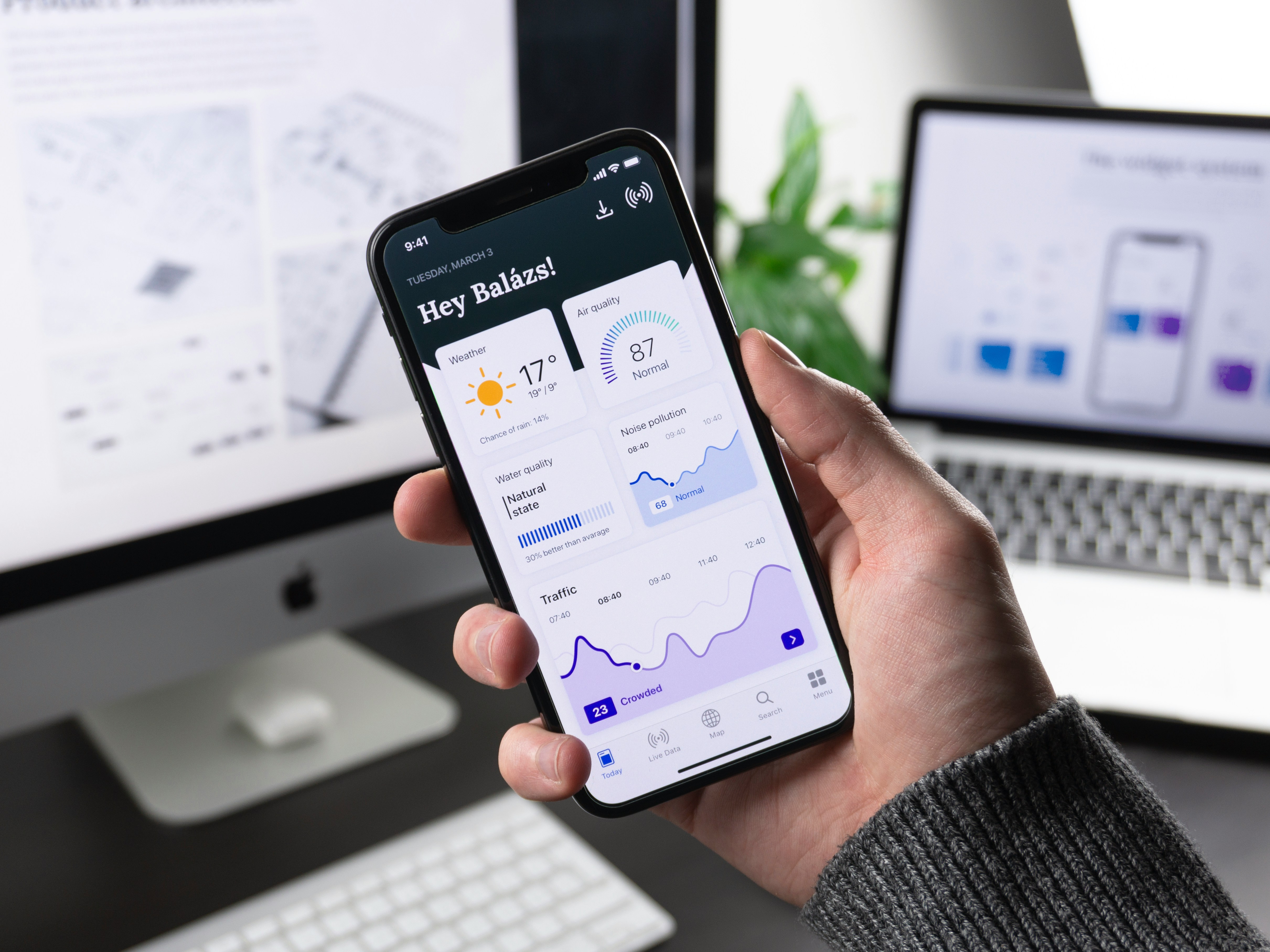
Real-time data dashboards, push notifications, and offline-first architecture — core capabilities of enterprise mobile apps
Biometric Authentication
Implement Face ID, fingerprint scanning, and multi-factor authentication for secure, frictionless user access. Biometric authentication (fingerprint, Face ID, behavioral biometrics) combined with multi-factor authentication with adaptive risk-based challenges ensures layered protection at every entry point. Our native iOS and Android development covers advanced biometric features including ARKit experiences and deep hardware integration. Our solutions leverage blockchain for transparent authentication, trustless transactions, and immutable data integrity across your mobile platform. HIPAA-compliant apps with sensor telemetry, predictive maintenance, AI analytics, and secure patient data management. PSD2-compliant mobile banking with KYC integration, real-time fraud detection, dApps, and multi-factor authentication. Biometric authentication works seamlessly alongside one-tap commerce and push notifications — allowing users to authorize purchases, confirm identity, and receive transaction alerts without leaving the app.
AI-Powered Analytics
Leverage predictive analytics and intelligent recommendations to personalize every touchpoint of the user journey. Integrate machine learning models and AI-powered analytics directly into your mobile experience. Machine learning algorithms, natural language processing, and AI-powered personalization integrated directly into the mobile experience. AI-powered analytics and predictive insights deliver actionable intelligence for Super apps and enterprise solutions. Our predictive analytics and intelligent recommendations engine processes behavioral signals — tap patterns, scroll depth, session frequency, and purchase history — to deliver hyper-personalized content, offers, and navigation paths in real time. AI-powered analytics also power backend decision-making: churn prediction models, dynamic pricing algorithms, and anomaly detection systems that alert your team to unusual activity before it impacts the user experience. We deploy models on-device for low-latency inference or in the cloud for compute-intensive workloads, with seamless API integration connecting the analytics layer to your existing data warehouse and BI tools.
In-App Messaging with End-to-End Encryption
Deliver secure communication channels within your app, protecting user data with military-grade encryption protocols. In-app messaging with end-to-end encryption ensures private conversations remain confidential across all devices. We configure, customize, and extend platform capabilities while ensuring enterprise-grade security and scalability. Our in-app messaging with end-to-end encryption supports rich media — images, documents, voice notes, and location sharing — with message delivery receipts and real-time typing indicators. End-to-end encryption is applied at the message level using industry-standard cryptographic protocols, with key management handled transparently so users experience zero friction. In-app messaging integrates natively with push notifications to alert users of new messages even when the app is backgrounded, and with AI chat integration for automated responses and smart routing to human agents when needed. Offline-first architecture ensures messages are queued locally and delivered automatically when connectivity is restored, maintaining real-time multi-device synchronization across phones, tablets, and wearables.
AI Chat Integration
Embed intelligent conversational interfaces powered by natural language processing for support, onboarding, and commerce. AI chat integration delivers context-aware, multi-turn conversations that handle customer inquiries, guide users through complex workflows, and complete transactions — all within the chat interface. Our AI chat integration connects to your CRM, knowledge base, and order management systems through seamless API integration, enabling the chatbot to pull account details, check inventory, process returns, and trigger push notifications based on conversation outcomes. For commerce use cases, AI chat integration supports one-tap commerce directly within the conversation — users can browse products, receive predictive analytics and intelligent recommendations, and complete purchases without navigating away from the chat. Push notifications with segmentation and personalization keep users engaged with timely, relevant content. We ensure access to native device features — camera, geolocation, push notifications — through proven Capacitor and Cordova plugin ecosystems. PWAs eliminate app store approval delays and allow instant updates, making them ideal for fast-moving businesses and global audiences.
Voice and Video Calling with Screen Sharing
Integrate real-time communication features including voice and video calling with screen sharing, session recording, and live collaboration. Voice and video calling with screen sharing enables use cases from telehealth consultations and remote technical support to live sales demos and team collaboration — all embedded natively within your app. Our implementation supports adaptive bitrate streaming for consistent call quality across network conditions, background noise suppression powered by machine learning algorithms, and real-time multi-device synchronization so users can seamlessly switch calls between phone, tablet, and desktop. Screen sharing includes annotation tools, remote cursor visibility, and the option to record sessions for compliance, training, or quality assurance purposes. We leverage the full breadth of platform capabilities including Material Design 3, background services, custom widgets, and deep integration with native platform services. Seamless pairing between wearable and mobile companion apps ensures continuous data flow and synchronized user experiences. Our gaming app development team handles everything from game engine integration and physics simulations to leaderboards, social features, and monetization strategies — optimizing for performance across a wide range of devices.
Legacy Mobile Upgrade & AI Augmentation
Upgrade aging mobile systems with modern architecture, AI augmentation, and improved performance. We execute phased migrations that re-platform legacy modules while preserving critical business logic and user data. For legacy mobile upgrades, we assess your existing codebase, identify technical debt and security vulnerabilities, and execute a phased migration — re-platforming legacy modules while preserving business logic. Modernizing aging mobile systems with updated architecture, improved performance, and AI augmentation can significantly reduce long-term maintenance costs. Offline-first architecture with automatic sync and real-time multi-device synchronization with conflict resolution ensure uninterrupted user experiences throughout the upgrade process.
Technology Stack and Advanced Technologies
We select the optimal technology stack based on your project goals — performance, scalability, and long-term maintainability. We cover the full dApp stack — from Solidity and Rust smart contracts to mobile wallet connectivity, NFT marketplaces, and DeFi interfaces. Shared business logic, unified CI/CD pipelines, agile processes, and data-driven strategies built on modern development frameworks mean faster iteration cycles, simultaneous releases on both platforms, and consistently feature-rich apps that exceed expectations. AI augmentation layers add predictive analytics, intelligent automation, and personalized experiences on top of your modernized stack — extending the lifespan and ROI of your existing investment. Ensure full app functionality even without network connectivity, with automatic sync when connection is restored. Streamline purchases with multiple payment gateways, instant checkout, and seamless in-app transaction flows. Our technology decisions are driven by a rigorous evaluation process: we assess each technology against performance benchmarks, community maturity, long-term support, and alignment with your team's velocity — ensuring that every component of the stack delivers measurable value today and remains maintainable for years to come.

React Native, Flutter, and native iOS/Android development using modern toolchains and CI/CD pipelines
Mobile Frameworks & Languages
Swift, Objective-C, Kotlin, React Native, Flutter, Ionic framework — chosen based on platform requirements and team velocity. Every app is engineered to meet platform-specific design guidelines while delivering the speed, stability, and polish that users expect. Swift and Objective-C power our native iOS app development, giving us full access to Apple's latest APIs — from ARKit and Core ML to HealthKit and HomeKit. For Android, Kotlin is our primary language, providing null safety, coroutine-based concurrency, and seamless interoperability with Java for legacy codebases. React Native enables cross-platform delivery with a JavaScript bridge to native modules, ideal for teams that value web-stack familiarity and rapid iteration. Flutter offers pixel-perfect UI rendering through its own rendering engine, eliminating platform inconsistencies and enabling 120fps animations on supported devices. The Ionic framework serves hybrid and PWA use cases, leveraging standard web technologies (HTML, CSS, TypeScript) wrapped in native containers via Capacitor — making it an efficient choice for teams that want a single codebase deployable to iOS, Android, and the web. We match each framework and language to your project's specific needs: performance-critical apps get native Swift or Kotlin; broad-reach products with shared UI get Flutter or React Native; and rapid-deployment internal tools get the Ionic framework.
5G Connectivity & IoT Orchestration
Harness 5G connectivity for low-latency applications and IoT orchestration for connected device ecosystems. 5G connectivity unlocks sub-10ms latency and multi-gigabit throughput, enabling real-time experiences that were previously impossible on mobile — from cloud-rendered AR/VR and live 4K video streaming to mission-critical industrial telemetry. Our IoT orchestration layer manages device provisioning, firmware updates, telemetry ingestion, and command-and-control workflows across heterogeneous device fleets. We build 5G connectivity-aware applications that dynamically adapt behavior based on network capabilities — falling back gracefully to LTE or Wi-Fi when 5G is unavailable, and activating bandwidth-intensive features like high-resolution asset streaming and real-time sensor fusion when 5G connectivity is detected. IoT orchestration is powered by event-driven architectures with MQTT and AMQP messaging, edge gateways for local preprocessing, and cloud-based analytics pipelines that aggregate telemetry from thousands of connected endpoints. Whether you're building smart factory dashboards, connected vehicle platforms, or remote patient monitoring systems, our 5G connectivity and IoT orchestration capabilities provide the foundation for reliable, scalable, real-time data flows.
Edge Computing
Process data closer to the user for faster response times, reduced bandwidth, and enhanced privacy. Edge computing moves computation from centralized cloud servers to edge nodes — on-device, on-premises, or at the network edge — reducing round-trip latency from hundreds of milliseconds to single digits. For mobile applications, edge computing enables real-time AI inference (image recognition, natural language processing, anomaly detection) without sending sensitive data over the network, significantly enhancing privacy and compliance with data residency requirements. We deploy edge computing solutions on a range of hardware — from mobile GPUs and on-device ML accelerators (Apple Neural Engine, Google Tensor) to edge servers and IoT gateways — selecting the optimal tier based on compute requirements, power constraints, and latency targets. Edge computing also reduces cloud infrastructure costs by filtering and aggregating data locally before transmitting only meaningful events to the cloud. Combined with machine learning algorithms optimized for edge deployment (quantized models, pruning, knowledge distillation), our edge computing architecture delivers AI-powered personalization and predictive analytics at the speed users expect.
Security & Authentication
OAuth2, tokenization, biometric layers, and certificate pinning for enterprise-grade app security. Our security and authentication architecture implements OAuth2 with PKCE (Proof Key for Code Exchange) for secure authorization flows on mobile — eliminating the risks associated with storing client secrets on-device. Tokenization replaces sensitive data (card numbers, PII, session identifiers) with non-reversible tokens, ensuring that even if a device is compromised, the underlying data remains protected. Certificate pinning prevents man-in-the-middle attacks by validating server certificates against known hashes embedded in the app binary, with automated rotation workflows to prevent outages when certificates expire. Biometric layers — Face ID, fingerprint, and behavioral biometrics — provide frictionless, hardware-backed authentication that integrates with OAuth2 token refresh flows, enabling silent re-authentication without interrupting the user experience. We combine these layers with runtime application self-protection (RASP), jailbreak/root detection, and secure enclave storage to build a defense-in-depth security posture that meets the requirements of regulated industries including healthcare, finance, and government.
Blockchain & Web3
Full-stack dApp capabilities — from Solidity/Rust smart contracts and on-chain logic to mobile wallet connectivity, NFT marketplaces, and DeFi interfaces. We build trustless, transparent applications that leverage blockchain for authentication, payments, and data integrity. Our blockchain and Web3 practice covers the complete stack: smart contract development and auditing in Solidity (Ethereum, Polygon, Arbitrum) and Rust (Solana, Near), mobile wallet integration via WalletConnect and custom SDKs, and decentralized identity solutions that give users control over their credentials. For tokenization use cases, we implement ERC-20, ERC-721, and ERC-1155 standards — powering fungible tokens, NFTs, and semi-fungible assets with on-chain provenance and royalty enforcement. DeFi interfaces include swap aggregators, liquidity pool dashboards, staking interfaces, and yield calculators — all designed with mobile-first UX principles and connected to blockchain nodes through redundant RPC endpoints with automated failover. Our AI-powered personalization layers enhance Web3 experiences by recommending tokens, collections, and DeFi strategies based on user behavior and on-chain activity — blending machine learning algorithms with blockchain transparency.
AI, Machine Learning & Natural Language Processing
Our technology stack includes production-grade AI, machine learning algorithms, and natural language processing capabilities that power intelligent features across every app we build. Machine learning algorithms drive core functionality — from recommendation engines and demand forecasting to fraud detection and dynamic pricing — trained on your proprietary data and deployed as microservices with seamless API integration. Natural language processing powers AI chat integration, voice command interfaces, sentiment analysis, and multilingual content understanding — enabling your app to interpret user intent, extract entities, and generate human-quality responses in real time. We deploy AI-powered personalization models using a hybrid architecture: lightweight models run on-device via Core ML (iOS) and TensorFlow Lite (Android) for low-latency inference, while larger models execute in the cloud with results cached at the edge for rapid delivery. Our ML pipeline covers the full lifecycle — data collection, feature engineering, model training, A/B evaluation, deployment, and continuous monitoring — ensuring that models improve over time as user behavior evolves. Tokenization of user inputs protects privacy throughout the ML pipeline, ensuring that personally identifiable information never enters training datasets.
Industry-Specific Solutions and Use Cases
We combine mobile engineering with deep domain expertise to build solutions that meet industry-specific compliance, workflows, and user expectations. Every vertical we serve benefits from our full technology stack — including 5G & IoT telemetry, AI analytics, edge computing, and sensor telemetry — applied within the context of rigorous industry-specific compliance standards. Whether you need low-code/no-code super apps for rapid service consolidation or custom-built dApps for decentralized workflows, our teams tailor every solution to the regulatory, operational, and user experience demands of your sector.

Industry-specific mobile solutions — from e-commerce and media platforms to healthcare, fintech, and enterprise workflows
Healthcare
Build telehealth platforms, patient portals, and clinical workflow apps tailored to healthcare regulations and data privacy standards. Our healthcare solutions leverage sensor telemetry from wearable and IoT medical devices to capture real-time patient vitals, while AI analytics power predictive diagnostics and personalized treatment recommendations. Edge computing ensures low-latency processing of sensitive clinical data on-premises, and industry-specific compliance with HIPAA, HL7, and FHIR standards is embedded throughout every layer. We also deliver predictive maintenance for connected medical equipment, reducing downtime and extending asset lifecycles. Our telehealth apps include voice and video calling with screen sharing for remote consultations, AI-powered triage chatbots, and integration with ERP/MES systems for hospital resource management. Sensor telemetry from wearable devices feeds into real-time dashboards that alert clinicians to anomalies, while dApps secure patient consent records and clinical trial data on tamper-proof blockchain ledgers.
Finance & Banking
Secure mobile banking, payment processing, and fintech applications designed for regulated financial environments. We build PSD2-compliant platforms with KYC integration, real-time fraud detection, and multi-factor authentication — all backed by industry-specific compliance audits. Our dApps enable trustless transactions, decentralized lending, and tokenized asset management for forward-thinking financial institutions. AI analytics drive personalized financial insights, credit scoring models, and anomaly detection across transaction streams. Edge computing processes transaction risk scoring on-device for sub-second authorization decisions, while 5G connectivity enables real-time market data streaming for trading platforms. Our fintech solutions integrate with multiple payment gateways and core banking APIs through secure, well-documented REST and GraphQL interfaces. Low-code/no-code super apps allow banks to rapidly deploy new product offerings — from insurance marketplace modules to investment advisory tools — without rebuilding core infrastructure. Supplier portals for vendor management and procurement are embedded within enterprise banking platforms, streamlining operational workflows alongside customer-facing features.
Retail & E-commerce
Low-code/no-code super apps with inventory & QC workflows, AI-powered recommendations, and omnichannel commerce. Our retail solutions unify in-store and online experiences with real-time inventory synchronization, dynamic pricing engines, and AI analytics that optimize product placement and promotions. Sensor telemetry from smart shelves and IoT-enabled warehouses feeds directly into predictive maintenance and supply chain dashboards. We integrate supplier portals that streamline procurement, automate reorder triggers, and provide full visibility across the fulfillment pipeline. Edge computing powers in-store experiences — real-time product recognition, AR try-on features, and personalized digital signage — by processing data locally without relying on cloud round-trips. Network slicing guarantees dedicated 5G bandwidth for high-density retail environments where hundreds of IoT devices and customer smartphones compete for connectivity. Our retail dApps enable loyalty token programs, NFT-based limited editions, and transparent supply chain provenance — giving customers verifiable proof of authenticity and ethical sourcing.
Manufacturing & Energy
ERP/MES integration, 5G & IoT telemetry, edge computing, predictive maintenance, and supplier portals for connected factory operations. We build mobile-first dashboards that aggregate sensor telemetry from production lines, energy grids, and field equipment — delivering real-time operational intelligence to plant managers and field engineers. Edge computing processes high-frequency telemetry data locally to minimize latency and bandwidth costs, while AI analytics identify anomalies, predict equipment failures, and optimize energy consumption. Network slicing ensures dedicated, interference-free 5G connectivity for mission-critical industrial IoT applications. Our supplier portals provide vendors with self-service access to purchase orders, delivery schedules, and quality documentation — reducing manual coordination and accelerating procurement cycles. Inventory & QC workflows embedded within the mobile platform enable real-time quality inspections, non-conformance tracking, and automated escalation — with sensor telemetry from production equipment feeding directly into QC decision engines. Industry-specific compliance with ISO 9001, ISO 14001, and sector-specific safety regulations is built into every workflow, with audit trails and digital signatures ensuring regulatory readiness at all times.
Logistics & Supply Chain
Real-time tracking, network slicing for dedicated connectivity, sensor telemetry, and route optimization. Our logistics solutions combine 5G & IoT telemetry with AI analytics to deliver end-to-end supply chain visibility — from warehouse pick-and-pack to last-mile delivery. Edge computing enables on-vehicle data processing for autonomous routing decisions, while predictive maintenance algorithms monitor fleet health and schedule servicing before breakdowns occur. Network slicing guarantees low-latency, high-reliability connectivity for time-sensitive tracking and communication in dense urban or remote environments. Supplier portals give partners real-time access to shipment status, inventory levels, and delivery performance metrics. Our logistics dApps provide blockchain-verified chain-of-custody records, smart contract-based payment automation, and tokenized carbon credit tracking for sustainability reporting. Low-code/no-code super apps allow logistics operators to rapidly deploy custom workflows — driver onboarding, proof-of-delivery capture, returns processing — without engineering bottlenecks. Industry-specific compliance with customs regulations, hazardous materials handling, and cold chain monitoring is integrated into every sensor telemetry pipeline and reporting dashboard.
Real Estate
Property search apps with virtual tours, AI analytics, document management, and secure transaction processing. Our real estate platforms harness AI analytics for automated property valuation, market trend forecasting, and personalized listing recommendations. We integrate dApps for blockchain-based title verification, smart contract escrow, and tokenized property investment — bringing transparency and efficiency to traditionally paper-heavy processes. IoT sensor telemetry from smart buildings feeds into predictive maintenance systems that help property managers reduce operating costs and improve tenant satisfaction. Low-code/no-code super apps enable real estate agencies to rapidly deploy branded portals with CRM integration, lead management, and industry-specific compliance workflows built in. Edge computing powers immersive virtual tours with real-time 3D rendering and AI-enhanced image processing, while 5G connectivity enables smooth streaming of high-resolution walkthrough videos directly on mobile. Supplier portals connect property management firms with maintenance vendors, enabling automated work order dispatch, contractor performance tracking, and invoice reconciliation within the same platform.
Development Process and Methodology
Our agile methodologies provide a proven, repeatable framework that ensures transparency, speed, and predictable delivery at every stage of mobile app development — from the initial product development roadmap and rapid prototyping through architecture design, coding, quality assurance, deployment, and ongoing maintenance. Every project follows a structured yet flexible process: milestones are defined early, progress is validated through biweekly demos, and stakeholder feedback shapes priorities in real time. Whether you need end-to-end custom mobile app development or targeted support at a specific stage, our agile methodologies adapt to your team, timeline, and business goals.
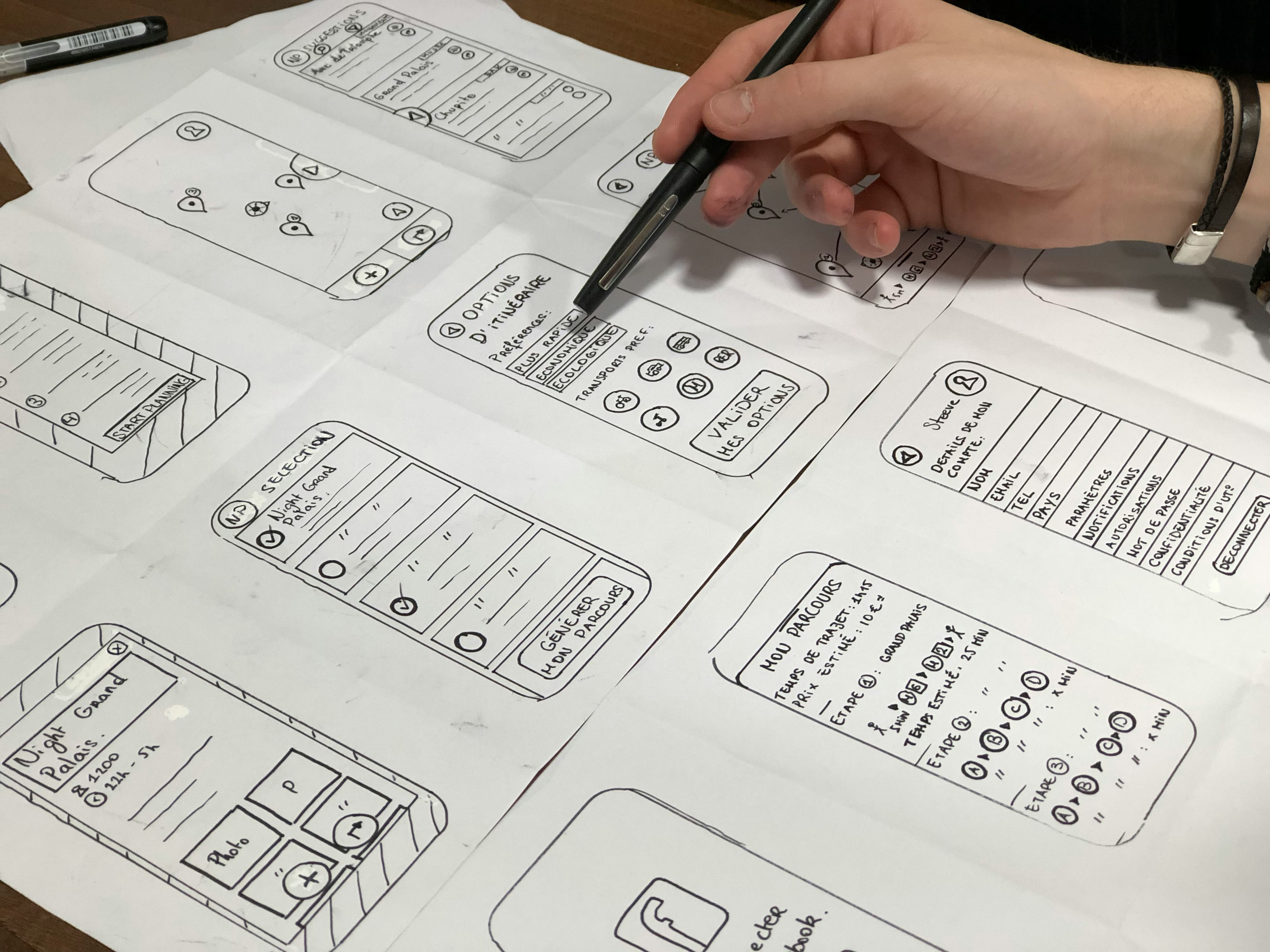
Mobile app wireframing and rapid prototyping during the discovery phase — validating user journeys before production coding begins
Discovery & Product Development Roadmap
The discovery phase transforms business objectives into a clear, actionable product development roadmap. We define the product vision, map user journeys, validate assumptions through rapid prototyping, and establish milestones with clear timelines and measurable success criteria. During discovery, our team conducts competitive analysis, stakeholder interviews, and technical feasibility assessments to shape a product development roadmap that aligns strategic goals with real user needs. Rapid prototyping — using interactive wireframes, clickable mockups, and functional prototypes — lets you test core concepts with target users before a single line of production coding begins. We iterate on prototypes until the value proposition is validated, reducing the risk of building features that miss the mark. The result is a prioritized backlog with well-defined milestones, acceptance criteria, and a delivery timeline that de-risks the entire project and keeps all stakeholders aligned from day one.
Architecture Design
Every project starts with a thorough architecture design phase that establishes the technical foundation for current requirements and future growth. We design for horizontal scalability, automated failover, and real-time event-driven architectures — selecting the right patterns (monolith, microservices, serverless) based on your product development roadmap and scaling expectations. Our architects evaluate technology trade-offs — REST vs. GraphQL, native vs. cross-platform, relational vs. NoSQL — and document every decision in architecture design records that guide the coding team throughout the development lifecycle. Architecture design also covers data modeling, API contract definitions, security layers, and CI/CD pipeline configuration — ensuring that the system is ready for agile development from sprint one. This upfront investment in architecture design reduces technical debt, accelerates feature delivery, and ensures your custom mobile app development scales predictably as your user base grows.
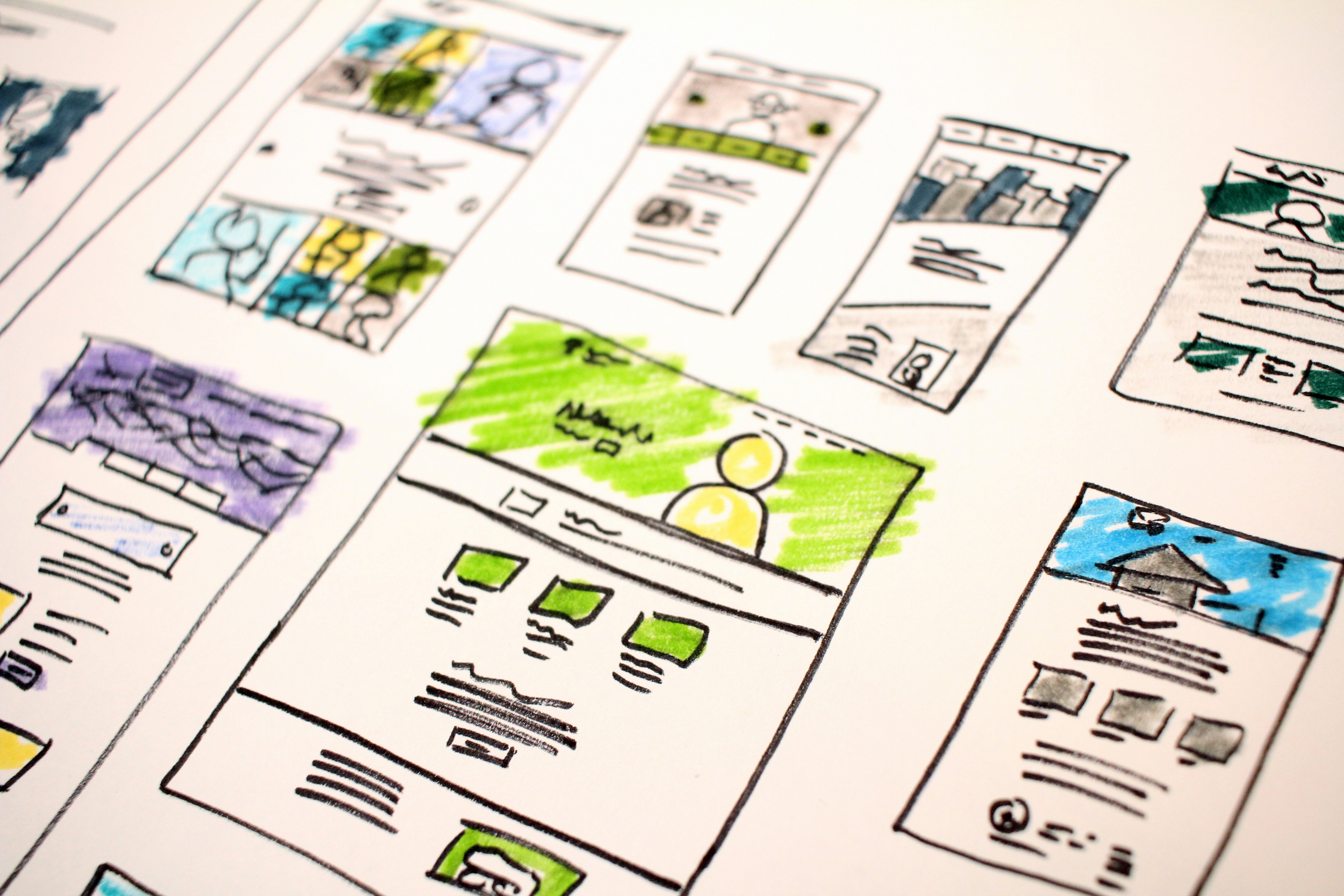
UI wireframe sketches and interaction design — translating product vision into testable prototypes across sprint cycles
Agile Development, Coding & Biweekly Demos
The development phase is where architecture design becomes a working product through disciplined sprint-based coding and continuous stakeholder validation via biweekly demos. Each two-week sprint delivers a shippable increment — production-ready features that have passed code review, automated testing, and design quality assurance. Biweekly demos create a transparent feedback loop: stakeholders validate functionality against milestones, reprioritize the backlog when needed, and maintain full visibility into velocity and delivery health. Our agile methodologies include daily standups, sprint planning, sprint retrospectives, and burndown tracking — ensuring the coding team stays focused, blockers are resolved fast, and quality assurance is never sacrificed for speed. Every coding decision is informed by the product development roadmap and architecture design records, maintaining consistency and traceability across the entire codebase. For custom mobile app development projects, we embed domain experts alongside the coding team to ensure business logic is implemented accurately from the first sprint.
Quality Assurance & Testing
Quality assurance is embedded throughout the development lifecycle — not isolated as a final gate. Our QA engineers work in parallel with developers from sprint one, writing test plans, automating regression suites, and executing exploratory testing on every build. Continuous quality assurance automation covers functional testing, regression testing, integration testing, and UI testing across real devices and emulators. Penetration testing and vulnerability assessments are performed at key milestones and before every major release to identify and remediate security gaps before they reach production. We schedule vulnerability assessments as recurring checkpoints in the product development roadmap, ensuring that security is validated at every critical juncture — not just at launch. We combine automated and manual quality assurance to cover edge cases, accessibility standards, localization, and platform-specific behaviors that automated scripts alone can miss. Test results and coverage metrics are reviewed during biweekly demos, giving stakeholders full confidence in release readiness.
Deployment & App Store Submission
Deployment is a managed, repeatable process that moves your app from development into production environments and public app stores with minimal risk. We manage the full app store submission process for both Apple App Store and Google Play — handling metadata preparation, screenshot generation, compliance reviews, content rating questionnaires, and privacy declarations. Our team proactively addresses common rejection reasons — including privacy policy requirements, permission justifications, and design guideline adherence — so your app store submission is approved on the first attempt. Beyond app store submission, we configure automated deployment pipelines (CI/CD) for staging and production environments, enabling zero-downtime releases and instant rollbacks when needed. Feature flags allow gradual rollouts and controlled A/B testing in production without requiring additional app store submission cycles. Post-deployment, we monitor review status, crash reports, and user feedback within the first 48 hours — responding to any platform queries or production issues immediately to keep your launch milestones on track.
Post-Launch Maintenance & Iteration
Launch is not the finish line — it is the beginning of continuous improvement. Our post-launch maintenance process covers OS and dependency updates, security patching, performance monitoring, and compliance alignment as platforms and regulations evolve. We treat maintenance as an extension of our agile methodologies: bug fixes, performance improvements, and minor feature requests are triaged, prioritized, and delivered in regular sprint cycles with the same biweekly demos and stakeholder transparency as the initial build. The product development roadmap remains a living document — updated quarterly based on user analytics, market shifts, and business priorities to ensure that new milestones reflect current opportunities. Penetration testing and vulnerability assessments continue on a scheduled cadence post-launch, and quality assurance regression suites run automatically with every update to prevent regressions.
Custom Mobile App Development
Fully bespoke custom mobile app development tailored to your unique business logic, user workflows, and integration requirements. Unlike template-based solutions, our custom builds are engineered from the ground up — giving you full ownership of the codebase, complete flexibility to evolve features, and zero vendor lock-in. Every custom mobile app development project follows our end-to-end methodology: discovery with rapid prototyping, architecture design, agile coding with biweekly demos, rigorous quality assurance including penetration testing and vulnerability assessments, managed app store submission and deployment, and ongoing maintenance — ensuring consistent delivery standards regardless of project complexity. Milestones, sprint velocity, and product development roadmap progress are tracked in shared dashboards, keeping all stakeholders aligned from first commit to post-launch optimization.
Security, Compliance, and Quality Assurance
Security is embedded into every phase of development — not bolted on at the end. From the first line of code to post-launch maintenance, our DevSecOps pipelines, secure coding standards, and compliance-grade security practices ensure that vulnerabilities are caught early, compliance requirements are met continuously, and quality is validated at every milestone. We keep data consistent across phones, tablets, and wearables with offline-first architecture and automatic conflict resolution. We handle all aspects of store submission — guidelines compliance, metadata optimization, and approval management for both App Store and Google Play. Continuous ASO to improve visibility, downloads, and conversion rates across App Store and Google Play. Our security, compliance, and quality assurance framework is designed to satisfy the most stringent regulatory environments — including healthcare, finance, government, and defense — while remaining agile enough to support rapid release cycles without introducing risk.

Enterprise-grade mobile security — layered authentication, certificate pinning, and encrypted data at every touch point
DevSecOps Pipelines
Integrate security checks directly into CI/CD pipelines for automated vulnerability detection at every commit. Our DevSecOps pipelines embed security at every stage of the software delivery lifecycle — from pre-commit hooks that scan for secrets and credentials, to static application security testing (SAST) during build, dynamic application security testing (DAST) against staging environments, and software composition analysis (SCA) that continuously monitors third-party dependencies for known vulnerabilities. Every pull request triggers an automated security gate: code that introduces critical or high-severity findings is blocked from merging until remediated. Our DevSecOps pipelines integrate with industry-standard tools — SonarQube, Checkmarx, Snyk, OWASP ZAP — and generate consolidated security dashboards that give your team real-time visibility into risk posture across all codebases. Infrastructure-as-code (Terraform, CloudFormation) is scanned for misconfigurations before deployment, and container images are validated against CIS benchmarks before entering production. This shift-left approach ensures that security is never a bottleneck — issues are caught in minutes, not months, and the cost of remediation is orders of magnitude lower than post-production fixes.
Secure Coding Standards
Follow OWASP Mobile Security Testing Guide and industry-grade security protocols throughout the development lifecycle. Our secure coding standards are based on the OWASP Mobile Security Testing Guide (MSTG) and the OWASP Mobile Application Security Verification Standard (MASVS), covering all critical areas: data storage and privacy, cryptography, authentication and session management, network communication, platform interaction, code quality, and resilience against reverse engineering. Every developer on our team completes annual secure coding training and certification, ensuring that industry-grade security protocols are understood and applied consistently across projects. Code reviews include mandatory security checklists: input validation, output encoding, parameterized queries, secure random number generation, and proper error handling that avoids information leakage. We enforce secure coding standards through automated linters, custom static analysis rules, and peer review gates — creating a multi-layered defense that catches issues at the developer's workstation before they ever reach the DevSecOps pipelines. Our secure coding standards extend to third-party library governance: every dependency is evaluated for license compliance, maintenance status, and known vulnerabilities before inclusion in any project.
Compliance-Grade Security
Meet regulatory requirements including HIPAA, GDPR, PSD2, and KYC mandates with auditable, documented processes. Our compliance-grade security framework provides end-to-end traceability: every security control is mapped to specific regulatory requirements, every configuration change is logged, and every access event is auditable. For HIPAA, we implement technical safeguards (encryption, access controls, audit logging), administrative safeguards (security policies, workforce training, incident response plans), and physical safeguards (secure hosting, data center certifications). GDPR compliance includes data minimization, purpose limitation, consent management, right-to-erasure workflows, and Data Protection Impact Assessments (DPIAs) for high-risk processing activities. PSD2 compliance covers Strong Customer Authentication (SCA), secure communication with banking APIs, and transaction monitoring for fraud detection. KYC mandates are addressed through identity verification integrations (document scanning, liveness detection, sanctions screening) that operate within our compliance-grade security perimeter. We maintain a compliance matrix that maps every regulatory requirement to specific technical controls, test evidence, and audit artifacts — enabling your team to demonstrate compliance-grade security to regulators, auditors, and enterprise customers with confidence.
Automated QA & Advanced Testing Methodologies
Combine automated QA with load testing, stress testing, and QA/QC testing to ensure performance under real-world conditions. Our automated QA framework executes thousands of test cases across every build — covering unit tests, integration tests, UI tests, and end-to-end flows on real device farms spanning iOS and Android versions. Advanced testing methodologies extend well beyond functional verification: load testing simulates thousands of concurrent users to validate response times and throughput under expected traffic; stress testing pushes the system beyond capacity to identify breaking points and ensure graceful degradation; and chaos engineering introduces controlled failures (network partitions, service crashes, database failovers) to verify resilience. QA/QC testing includes visual regression testing that detects unintended UI changes down to the pixel level, accessibility testing against WCAG 2.1 AA standards, and compatibility testing across screen sizes, OS versions, and device manufacturers. Our advanced testing methodologies also include security-focused testing: fuzz testing that sends malformed inputs to APIs and UI fields, and API contract testing that validates every endpoint against its specification. All automated QA results are aggregated in real-time dashboards with pass/fail trends, flaky test detection, and coverage gap analysis — giving stakeholders confidence that every release meets quality, performance, and security standards before reaching users.
Encryption Protocols
Protect data at rest and in transit using industry-standard encryption, tokenization, and secure session management. Our encryption protocols implement AES-256 for data at rest (databases, file storage, local device storage) and TLS 1.3 for data in transit — ensuring that sensitive information is protected throughout its lifecycle. Tokenization replaces high-value data (payment card numbers, social security numbers, health identifiers) with cryptographically generated tokens that are meaningless outside the tokenization vault, dramatically reducing PCI-DSS and HIPAA compliance scope. Secure session management includes short-lived JWT tokens with automatic refresh, server-side session revocation, and device binding that prevents session hijacking across devices. For applications requiring additional protection, we implement end-to-end encryption at the application layer — ensuring that data remains encrypted even if transport-layer security is compromised. Our encryption protocols are regularly validated through third-party cryptographic audits and penetration tests, and key management follows NIST SP 800-57 guidelines with hardware security module (HSM) backing for production environments. Encryption key rotation is automated and zero-downtime, ensuring continuous protection without operational disruption.
Regulatory Compliance Assurance
Maintain ongoing regulatory compliance assurance with evolving regulations through continuous monitoring, audits, and security patching. Regulatory compliance assurance is not a one-time checkbox — it is a continuous practice that adapts as regulations change and new threats emerge. Our compliance team continuously monitors regulatory updates across jurisdictions (GDPR enforcement actions, HIPAA guidance updates, PSD2 technical standards revisions, emerging state-level privacy laws) and assesses impact on your mobile application. Scheduled compliance audits — quarterly for high-risk applications, semi-annually for standard risk — verify that all controls remain effective and that documentation is current. Security patching follows a risk-based cadence: critical vulnerabilities are patched within 24 hours, high within 72 hours, and medium within 30 days — with automated scanning ensuring that no known vulnerability goes unaddressed. Our regulatory compliance assurance service includes incident response planning and tabletop exercises, ensuring that your team is prepared to respond to breaches in accordance with GDPR's 72-hour notification requirement and HIPAA's breach notification rules. We deliver compliance reports in formats accepted by major auditors and regulatory bodies, streamlining your certification renewals and enterprise customer security reviews.
Project Management and Cooperation Models
Flexible engagement models designed to match your team structure, budget, and delivery pace. We recognize that no two organizations operate the same way — some need a fully dedicated team that functions as an extension of their product org, while others need targeted staff augmentation to fill specific skill gaps. Our cooperation models are designed to scale up or down with your needs, with transparent project scoping, proactive change request management, and collaboration tools that keep distributed teams aligned regardless of time zone. Every engagement includes a structured onboarding process, weekly meetings, and sprint-based support to ensure predictable delivery and clear accountability from day one.

Dedicated teams, staff augmentation, and fixed monthly budget models — flexible cooperation structures for every project type
Dedicated Teams
Each project is powered by a dedicated team — a fully embedded group of developers, designers, and QA engineers — with team member selection, weekly meetings, and sprint-based support to ensure transparent delivery at every milestone. Our dedicated teams model gives you full control over team member selection: you interview and approve every engineer, designer, and QA specialist before they join your project. Dedicated teams operate as a true extension of your organization — attending your daily standups, using your tools (Jira, Confluence, Slack, GitHub), and following your processes. Weekly meetings with the product owner and stakeholders ensure alignment on priorities, while sprint-based support provides a predictable cadence of deliverables with clear velocity metrics. Dedicated teams are ideal for long-term product development engagements where deep domain knowledge, team stability, and continuous collaboration drive the best outcomes.
Staff Augmentation
Fill skill gaps with vetted engineers who integrate into your existing workflows, tools, and distributed teams. Our staff augmentation service provides pre-screened specialists — iOS, Android, Flutter, React Native, backend, DevOps, QA — who embed within your distributed teams and start contributing from week one. Unlike freelance platforms, our staff augmentation engineers are supported by our in-house PMO, who manages onboarding, performance reviews, and knowledge transfer. Staff augmentation scales flexibly: add engineers for a feature sprint, scale down after launch, or maintain a baseline team for ongoing development. Team member selection for staff augmentation follows the same rigorous process as dedicated teams — technical assessments, cultural fit interviews, and trial periods ensure that every augmented engineer meets your standards. Weekly meetings between augmented engineers and your leads maintain alignment, while our collaboration tools provide full visibility into hours, output, and sprint commitments.
Fixed Monthly Budget
Predictable monthly spend with defined scope, change request management, and protection against scope creep. Our fixed monthly budget model is designed for organizations that need cost certainty without sacrificing agility. At the start of each engagement, we conduct detailed project scoping to define deliverables, timelines, and acceptance criteria within the agreed monthly budget. Change request management ensures that any scope additions are formally documented, estimated, and approved before work begins — protecting you against scope creep while maintaining the flexibility to adapt as requirements evolve. Fixed monthly budget engagements include weekly meetings, burn reports, and sprint-based support with clear prioritization: your budget is always allocated to the highest-impact work. If priorities shift mid-sprint, our change request management process ensures seamless reprioritization without budget surprises. This model is ideal for ongoing product maintenance, iterative feature development, and long-term engagements where predictable spending and structured project scoping are essential.
In-House PMO & Collaboration
Seamless collaboration between your in-house PMO and our delivery team through shared tools, project scoping, and transparent reporting. Our in-house PMO integration model is designed for enterprises with established program management offices that need a development partner — not a black box. We align on project scoping, governance frameworks, reporting cadences, and escalation paths before work begins, ensuring that our delivery team operates within your existing project management standards. Shared collaboration tools — Jira, Asana, Monday.com, MS Project, or your preferred platform — provide a single source of truth for task tracking, sprint progress, and milestone completion. Weekly meetings between your in-house PMO and our project leads cover velocity, risks, dependencies, and upcoming milestones. Change request management is handled through your existing governance process, with our team providing impact assessments, LOE estimates, and timeline implications within 24 hours. For distributed teams spanning multiple time zones, we establish overlapping working hours, asynchronous communication protocols, and recorded stand-up summaries to ensure zero-loss handoffs. Our in-house PMO collaboration model also covers vendor management, multi-vendor coordination, and consolidated reporting — giving your PMO full visibility across all workstreams regardless of how many delivery partners are involved.
Cost and Pricing Considerations
Transparent pricing with no surprises — we help you plan, budget, and optimize your investment. Our cross-platform approach reduces development time and cost without compromising on user experience, animations, or platform-specific behavior. PWAs are a powerful choice for businesses seeking broad reach with lower distribution friction and simplified update cycles. Understanding the true cost of mobile app development requires looking beyond initial build — factoring in the cost to maintain the enterprise mobile app, ongoing backend development, and the development timeline implications of different technology and architecture choices. We provide detailed cost estimation at every stage, ensuring that your budget required vs. budget remaining is always transparent.

Transparent cost estimation and development timeline planning — from MVP budgets to full-scale enterprise mobile programs
Cost Estimation Factors
App complexity, number of platforms, custom features, design requirements, backend development scope, and technical requirements all influence the final budget. Our cost estimation process evaluates each factor in detail: app complexity is assessed across UI complexity (standard screens vs. custom animations, AR experiences, or real-time data visualizations), business logic complexity (simple CRUD operations vs. complex workflows, payment processing, or multi-tenant architecture), and integration complexity (number and sophistication of third-party APIs, legacy system connections, and data migration requirements). The number of platforms — iOS, Android, web, wearables — directly impacts both development and QA effort; cross-platform frameworks can reduce this multiplier, but the savings depend on how many platform-specific custom features are required. Design requirements range from standard material design implementations to fully bespoke UI with custom animations, micro-interactions, and accessibility compliance — each tier carrying different design and development hours. Backend development scope covers API design, database architecture, authentication services, cloud infrastructure, and DevOps pipelines. Technical requirements such as offline-first architecture, real-time synchronization, end-to-end encryption, and regulatory compliance add additional complexity that must be factored into every cost estimation. We quantify each factor and provide line-item breakdowns so you can make informed trade-off decisions between scope, quality, development timeline, and budget.
Pricing Models
Choose from fixed-price, time & material, or dedicated team models based on your project scope, development timeline, and budget required vs. budget remaining. Our fixed-price model is ideal for well-defined projects with stable requirements: we deliver an agreed scope at a guaranteed price, with change request management for any additions. Time & material pricing provides maximum flexibility — you pay for actual hours worked, with weekly reporting and the ability to adjust priorities, scope, and team size at any point during the development timeline. The dedicated team model offers a predictable monthly rate for a fully embedded team, combining the cost certainty of fixed-price with the flexibility of T&M. For each pricing model, we provide transparent cost estimation that breaks down project scope into phases, deliverables, and hourly effort — making budget required vs. budget remaining visible at every milestone. We also offer hybrid models: fixed-price for the initial MVP build, transitioning to T&M or dedicated team for iterative post-launch development. Every pricing model includes a detailed cost estimation of the cost to maintain the enterprise mobile app beyond launch — covering hosting, monitoring, security patching, OS updates, and feature iteration.
Hourly Rates & Budgeting
Competitive hourly rates with clear breakdowns. We provide detailed cost estimation including the cost to maintain the enterprise mobile app post-launch. Our hourly rates are structured by role and seniority — junior, mid, senior, and lead engineers, designers, QA specialists, and project managers — with transparent rate cards provided during project scoping. We help you build a realistic budget by mapping the product development roadmap to estimated hours per role per sprint, giving you full visibility into how your budget is allocated across design, frontend development, backend development, QA, and DevOps. Budget required vs. budget remaining is tracked in real time through shared dashboards, with automated alerts when spend approaches predefined thresholds. Our budgeting guidance includes recommendations for contingency reserves (typically 15–20% for projects with evolving requirements), phased delivery strategies that match development timeline milestones to funding cycles, and comparative analysis showing the cost impact of different technology and platform decisions. The cost to maintain the enterprise mobile app typically ranges from 15–25% of the initial build cost annually, covering hosting, security patching, OS compatibility updates, performance monitoring, and incremental feature development — we include this in every cost estimation to ensure there are no post-launch budget surprises.
Company Expertise, Recognition, and Partnerships
We invest in the certifications, partnerships, and people that set us apart. Our credibility is built on a foundation of rigorous industry certifications, accredited partnerships with leading technology platforms, and a product innovations team that drives continuous improvement across every engagement. We don't just claim expertise — we validate it through independent audits, renewal processes, and measurable client outcomes.
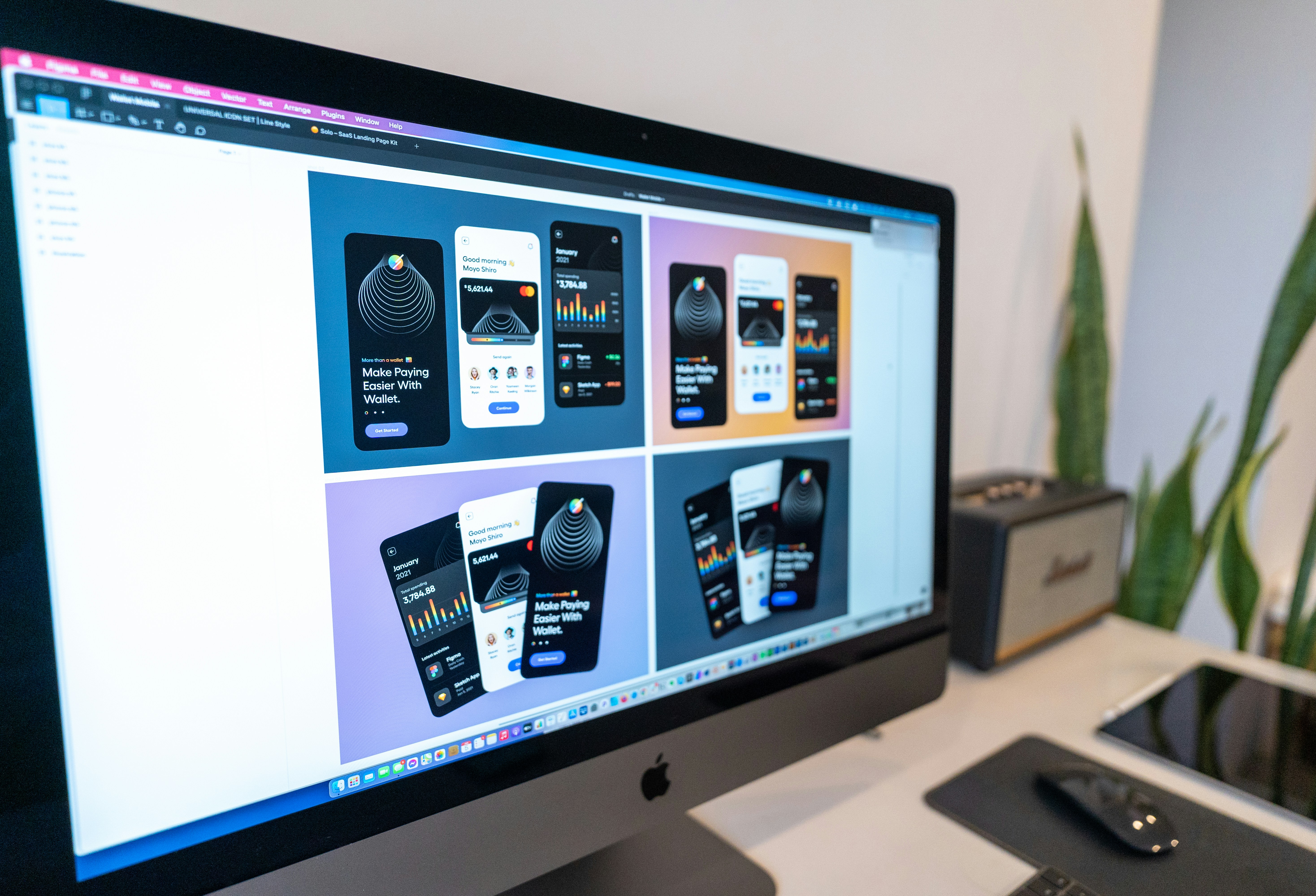
Mobile app UI design system built in Figma — crafting pixel-perfect, production-ready screens backed by CMMI Level 3 processes
Certifications & Standards
CMMI Level 3 certifications, ISO-27001, HIPAA-compliant processes, GDPR compliance, NIST Cybersecurity Framework, and OWASP Mobile Security Testing Guide adherence. Our CMMI Level 3 certifications validate that our development processes are defined, documented, and consistently followed across all projects — ensuring repeatability and predictability regardless of team composition or project complexity. ISO-27001 certification demonstrates our commitment to information security management: we maintain a comprehensive ISMS (Information Security Management System) with annual surveillance audits by accredited third-party auditors. Our HIPAA-compliant processes cover technical, administrative, and physical safeguards — verified through independent risk assessments and documented in Business Associate Agreements for every healthcare engagement. GDPR compliance is operationalized through data protection policies, Data Protection Impact Assessments, and privacy-by-design principles embedded into our architecture and development workflows. Adherence to the NIST Cybersecurity Framework (Identify, Protect, Detect, Respond, Recover) provides a structured approach to managing cyber risk that aligns with enterprise and government security expectations. We follow the OWASP Mobile Security Testing Guide as the baseline standard for mobile application security — every app we deliver is tested against OWASP MASVS requirements at the appropriate verification level (L1, L2, or R depending on risk profile).
Technology Partnerships
Certified AWS Partner with accredited partnerships across leading cloud, analytics, and security platforms. Our certified AWS Partner status reflects validated technical competency and a track record of successful cloud deployments — enabling access to AWS partner resources, co-sell programs, and advanced support tiers. Beyond AWS, we maintain accredited partnerships with Google Cloud, Microsoft Azure, MongoDB, Datadog, and Cloudflare — ensuring that we can architect and deploy on the platform that best fits your requirements. Each accredited partnership is maintained through ongoing certification renewals, joint solution development, and participation in partner advisory programs. Your app connects to any third-party service — CRM, ERP, payment systems, analytics platforms — through seamless API integration with robust, well-documented API layers. Our technology partnerships extend to specialized mobile and security vendors: Firebase for real-time database and analytics, Auth0 for identity management, Stripe and Adyen for payment processing, and Twilio for communications — each integration backed by certified engineers with hands-on implementation experience. These accredited partnerships give our clients access to preferred pricing, priority support, and early access to new platform capabilities.
Continuous Innovation
Our product innovations team delivers technology audit and assessment services, continuous QA automation, and forward-looking R&D backed by deep industry knowledge. The product innovations team is a dedicated group of senior engineers, architects, and researchers who operate independently from delivery teams — their mandate is to evaluate emerging technologies, build proof-of-concepts, and develop reusable accelerators that improve delivery speed and quality across all projects. Technology audit and assessment services help clients evaluate their existing systems: we analyze architecture, code quality, security posture, performance bottlenecks, and technical debt — delivering actionable recommendations with prioritized remediation roadmaps. Continuous QA automation is a core output of the product innovations team: we develop and maintain shared testing frameworks, device lab configurations, and CI/CD templates that are deployed across all client projects, ensuring that quality assurance standards are consistently high regardless of project size. Our industry knowledge spans healthcare, fintech, retail, logistics, manufacturing, and energy — gained through hundreds of delivered projects and reinforced through ongoing participation in industry conferences, standards bodies, and technology advisory boards. The product innovations team also publishes internal research on emerging topics — AI-powered testing, edge computing architectures, blockchain interoperability, and 5G application patterns — ensuring that our delivery teams always have access to the latest techniques and best practices.
Client Success Stories and Case Studies
Real results from real partnerships — our case studies demonstrate the tangible business outcomes that mobile app development delivers across industries. Every engagement is built on a long-term technology partnership where our industry-specific experts embed within your team to build feature-rich apps that drive measurable improvements in engagement, conversion, and retention. Our data-driven strategies and agile processes ensure that decisions — from architecture to UX — are validated by real-world performance data, not assumptions. Below are representative examples of how our approach has delivered results.
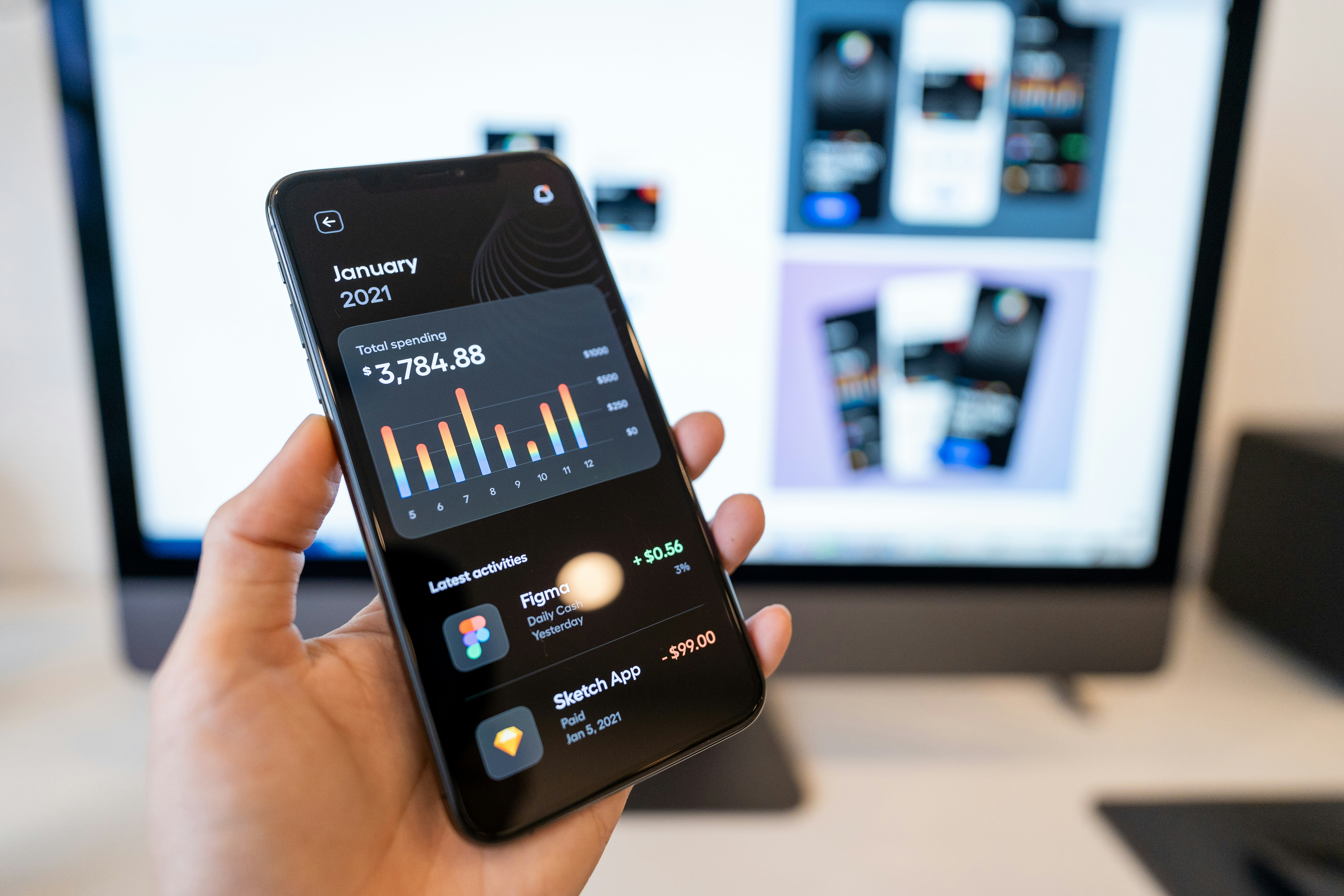
Fintech mobile app with real-time spending analytics, transaction history, and SOC 2 Type II compliance
Case Study: User-Centric Experiences That Drive Measurable Growth
Our case studies consistently show that investing in user-centric UI/UX produces outsized returns in engagement and revenue. For a leading European e-commerce retailer, we redesigned the entire mobile shopping journey around user-centric UI/UX principles — simplifying navigation, introducing personalized product feeds, and unifying checkout across multiple payment gateways including Apple Pay, Google Pay, Klarna, and local bank transfers. The result: a 38% increase in mobile conversion rate and a 27% reduction in cart abandonment within 90 days of launch. The feature-rich app included a real-time order management system that gave customers live visibility into picking, packing, shipping, and delivery — reducing support tickets by 45%. Secure app code practices — static analysis at every commit, dependency scanning, and runtime application self-protection — ensured zero critical vulnerabilities across three independent penetration tests. Our in-app experiences extended beyond transactions: personalized loyalty dashboards, contextual promotions, and an integrated feedback module created deeper engagement loops that increased repeat purchase frequency by 22%.
Case Study: Healthcare Platform with Real-Time Order Management
A North American telehealth provider partnered with us to build a patient-facing mobile platform that combined appointment booking, prescription management, and a real-time order management system for pharmacy fulfillment. Our industry-specific experts in healthcare compliance ensured HIPAA adherence at every layer — from secure app code and encrypted data storage to role-based access controls. We built the platform using modern development frameworks (React Native with a Node.js microservices backend) and agile processes with biweekly stakeholder demos. Reporting tools embedded into the admin dashboard gave clinical operations teams real-time visibility into appointment volumes, prescription fill rates, and patient satisfaction scores. The feature-rich app processed over 120,000 pharmacy orders in its first quarter, with a 99.7% order accuracy rate powered by the real-time order management system. Data-driven strategies — including A/B testing of onboarding flows and AI-powered appointment recommendations — increased monthly active users by 54% within six months. This technology partnership continues today with ongoing feature development, compliance updates, and performance optimization.
Case Study: Fintech Super App with Multiple Payment Gateways
For a fast-growing fintech startup, we delivered a feature-rich super app consolidating payments, budgeting, investment, and insurance into a single in-app experience. Integration of multiple payment gateways — Stripe, Adyen, and regional banking APIs — enabled seamless cross-border transactions in 14 currencies. Our agile processes and data-driven strategies guided every sprint: reporting tools tracked user flow completion rates, feature adoption, and revenue per transaction, allowing our team to prioritize high-impact improvements continuously. The secure app code architecture — built on development frameworks including Flutter for the frontend and Kotlin microservices on the backend — passed SOC 2 Type II and PCI-DSS audits on the first attempt. Industry-specific experts in financial regulation ensured PSD2 and KYC compliance from day one. Within 12 months, the app reached 200,000 active users with an average 4.8-star rating across both app stores — a direct result of relentless user-centric UI/UX optimization and data-driven iteration.
Data-Driven Strategies and Continuous Optimization
Across all our client engagements, data-driven strategies are the foundation of continuous improvement. Reporting tools embedded into every project give stakeholders real-time visibility into KPIs — user acquisition costs, session depth, conversion funnels, retention cohorts, and revenue per user. We use these insights to iterate on features, optimize user flows, and reprioritize the development backlog based on measurable business impact. In one logistics case study, our reporting tools identified a 60% drop-off in the driver onboarding flow; agile processes allowed us to redesign and deploy a streamlined flow within a single sprint, recovering 73% of lost completions. Modern development frameworks enable rapid experimentation: new features and in-app experiences move from hypothesis to production in days, not months, ensuring your feature-rich app stays ahead of market expectations. Every optimization cycle is documented in our case studies as evidence of the ROI our data-driven strategies deliver.
Technology Partnership That Lasts
Our clients stay because we deliver results — and because we invest in a genuine technology partnership that extends well beyond launch. Industry-specific experts in healthcare, fintech, retail, logistics, and manufacturing ensure your app is built with deep domain knowledge, not just technical competence. Reporting tools, continuous optimization, and dedicated account management ensure your app grows alongside your business. A mid-market retail client, now in its fourth year of technology partnership with us, has scaled from a single-market MVP to a feature-rich app serving 11 countries — with every expansion guided by data-driven strategies and delivered through agile processes using proven development frameworks. From ongoing performance audits and security reviews to feature roadmap planning and competitive analysis, our technology partnership model is designed to maximize long-term ROI and keep your product competitive. Our case studies show that clients who maintain a continuous technology partnership see an average 3.2x higher lifetime value from their mobile investment compared to build-and-handoff engagements.
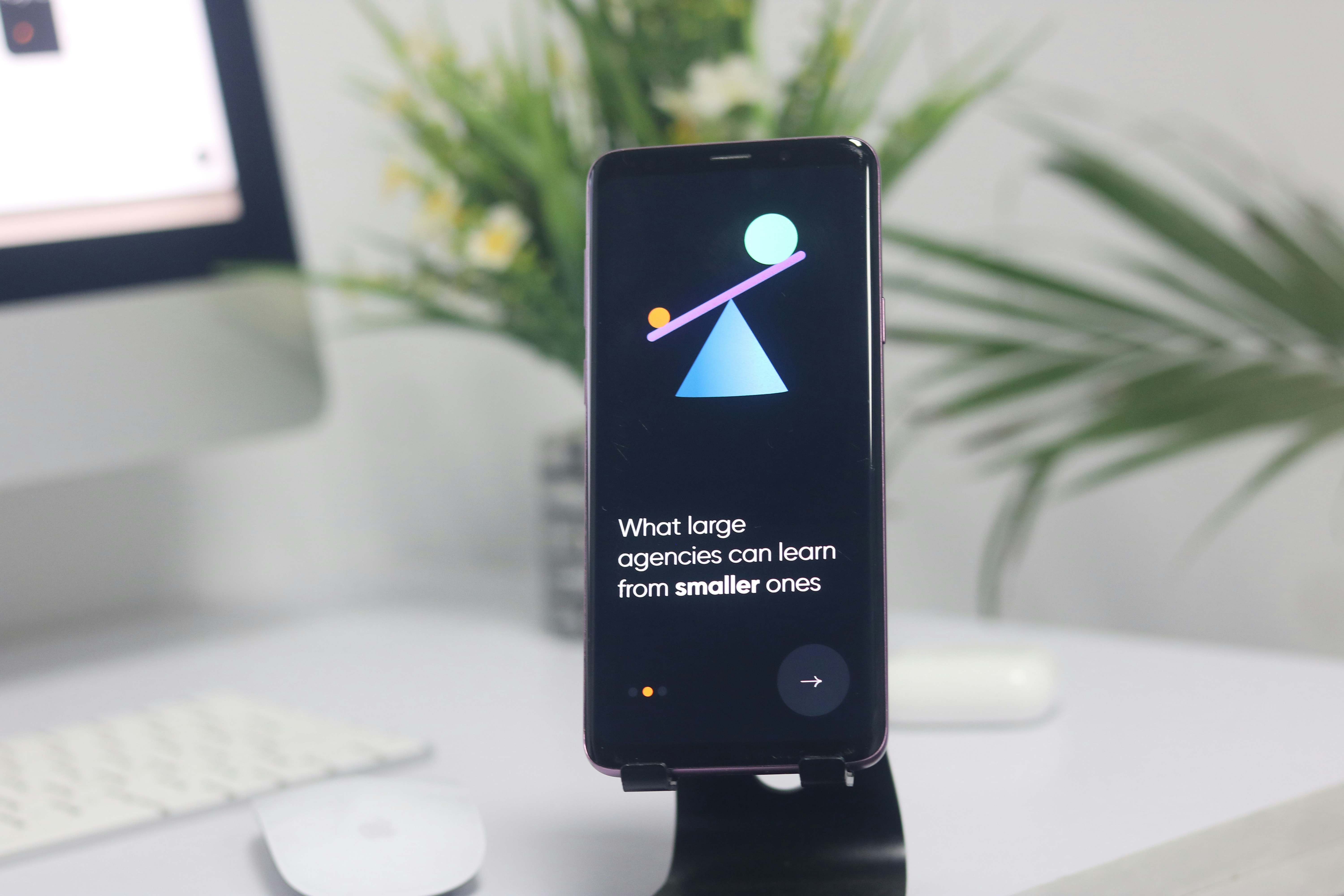
Long-term technology partnerships that scale — data-driven strategies and agile iterations driving measurable business outcomes
Frequently Asked Questions and Support
We stay with you long after launch — ensuring your app remains secure, performant, and competitive. Our post-launch support covers the full cycle from OS components updates and compliance monitoring to real-time production analytics and ongoing app store optimization. Whether you need proactive maintenance, technical support, or strategic guidance, our dedicated teams are always available. Below we address the most common questions our clients ask about ongoing support, maintenance, and the services that keep their mobile applications running at peak performance.

Post-launch support, OS updates, and ongoing app store optimization — keeping your mobile app competitive after launch
What does post-launch support and maintenance include?+
Ongoing maintenance includes OS components updates, security patching, compliance monitoring, and performance monitoring. Our post-launch support team continuously tracks platform changes — new iOS and Android releases, deprecated APIs, and evolving store guidelines — and proactively applies OS components updates to keep your app stable and compatible. Security patching is performed on a priority-based schedule: critical vulnerabilities are addressed within 24 hours, while routine patches are bundled into regular maintenance windows. Compliance monitoring ensures your app stays aligned with HIPAA, GDPR, PSD2, and other regulatory frameworks as requirements evolve. Performance monitoring dashboards track crash rates, response times, memory usage, and session metrics — triggering automated alerts when thresholds are breached so issues are resolved before users are affected. Post-launch support also covers dependency management: third-party SDKs, libraries, and API integrations are monitored for version updates, breaking changes, and security advisories. We perform quarterly health checks assessing app performance, user experience metrics, security posture, and compliance status — delivering detailed reports with actionable recommendations.
What is app store optimization and how does it work?+
App store optimization (ASO) is an ongoing process — not a one-time setup — of maximizing your app's discoverability and download rates. Our ASO specialists continuously refine keyword strategies, localize metadata for target markets, and A/B test screenshots, descriptions, and preview videos to improve conversion rates. We monitor ranking fluctuations, analyze competitor movements, and adjust tactics based on real-time performance data. We conduct monthly keyword audits analyzing search volume, competition density, and relevance — updating title, subtitle, and keyword fields to capture emerging search trends. Visual asset optimization includes iterative A/B testing of icon variants, screenshot sequences, and preview videos using platform-native experimentation tools (App Store Connect and Google Play Console). Our app store optimization service also covers review management — monitoring user ratings, responding to reviews, and identifying recurring feedback themes that inform product roadmap decisions.
What technical support and request management services do you offer?+
We provide dedicated technical support channels with structured request management, service discovery, user verification, and real-time production analytics. Our request management system ensures every ticket is triaged, prioritized, and routed to the right specialist — with SLA-backed response times for critical, high, and standard priority issues. Service discovery capabilities allow your team to explore available APIs, microservices, and integration endpoints through a centralized developer portal. Real-time production analytics give both your team and ours full visibility into system health, error rates, and user-facing performance — enabling faster root cause analysis and resolution. Our technical support extends beyond break-fix: we provide proactive recommendations for performance tuning, infrastructure scaling, and feature enhancements based on usage patterns and production telemetry. Request management integrates with your existing ticketing systems (Jira Service Management, Zendesk, ServiceNow) through bidirectional sync.
How much does mobile app development cost?+
Mobile app development cost depends on app complexity, number of platforms (iOS, Android, web, wearables), custom features, design requirements, backend development scope, and technical requirements. UI complexity, business logic complexity, and integration complexity are all assessed during our cost estimation process. The number of platforms directly impacts development and QA effort; cross-platform frameworks can reduce this multiplier. We offer fixed-price, time & material, and dedicated team pricing models. Our hourly rates are structured by role and seniority with transparent rate cards provided during project scoping. The cost to maintain an enterprise mobile app post-launch typically ranges from 15–25% of the initial build cost annually, covering hosting, security patching, OS compatibility updates, performance monitoring, and incremental feature development.
How long does it take to develop a mobile app?+
Development timeline depends on project scope and complexity. A basic MVP typically takes 3–4 months from discovery to launch. A full-featured app with custom backend, third-party integrations, compliance requirements, and advanced features like real-time synchronization or AI integration can take 6–12 months or more. Our process starts with a discovery phase where we define a product development roadmap with clear milestones, acceptance criteria, and a delivery timeline — giving you full visibility into the schedule before a single line of production code is written. Rapid prototyping during discovery allows core concepts to be validated with target users early, reducing the risk of building features that miss the mark.
Do you develop native or cross-platform mobile apps?+
We build both native and cross-platform mobile apps. Native iOS apps are built with Swift and Objective-C, giving full access to Apple's latest APIs — ARKit, Core ML, HealthKit, and HomeKit. Native Android apps use Kotlin as our primary language. For cross-platform development we use React Native and Flutter: React Native delivers a JavaScript bridge to native modules ideal for rapid iteration, while Flutter offers pixel-perfect UI rendering with 120fps animations on supported devices. The Ionic framework serves hybrid and PWA use cases via Capacitor. We match each framework to your project's specific needs: performance-critical apps get native Swift or Kotlin; broad-reach products with shared UI get Flutter or React Native; rapid-deployment internal tools get the Ionic framework.