At Craftsoft, we define enterprise software as a category of large-scale applications designed to support and automate core business processes across an entire organization. Unlike consumer-grade tools, these systems are built to handle complex workflows, manage vast amounts of data, and serve hundreds or thousands of users simultaneously. In our experience, enterprise software acts as the digital backbone of modern companies, connecting departments, standardizing operations, and enabling data-driven decision-making at every level.
Types of Enterprise Software
Enterprise software typically falls into several core categories, including Enterprise Resource Planning (ERP), Customer Relationship Management (CRM), and Human Capital Management (HCM) systems. These platforms help organizations manage internal operations, customer interactions, financial processes, supply chains, and workforce performance at scale. Additional types include Business Intelligence (BI), Enterprise Content Management (ECM), and industry-specific solutions designed to address the unique requirements of sectors such as healthcare, financial services, and manufacturing. Each category addresses a distinct operational domain, but modern enterprise architecture increasingly connects these systems through APIs and integration layers to create a unified digital environment.

Enterprise software platforms provide integrated management interfaces that connect core business functions — from finance and HR to supply chain and compliance — into a single operational environment.
Enterprise Resource Planning (ERP)
We regularly build and integrate ERP systems that unify an organization's key functions — finance, procurement, manufacturing, and human resources — into a single platform. By centralizing data and processes, ERP eliminates information silos, reduces manual effort, and provides leadership with a real-time view of business performance. In our projects, we work with leading ERP frameworks and have seen firsthand how the right implementation drives operational coherence at scale.
Customer Relationship Management (CRM)
Our team develops CRM solutions that enable businesses to manage interactions with current and prospective customers throughout the entire lifecycle. We build platforms that track sales pipelines, automate marketing campaigns, and consolidate customer data into unified profiles. Through our work, we help organizations personalize outreach, improve retention rates, and make smarter revenue forecasts based on historical patterns and behavioral insights.
Business Intelligence and Analytics Platforms
We design and deliver business intelligence platforms that transform raw organizational data into actionable insights through dashboards, visualizations, and advanced reporting. Our BI solutions aggregate information from multiple sources, allowing stakeholders to identify trends, measure KPIs, and make evidence-based decisions. Increasingly, we incorporate predictive analytics and machine learning to surface opportunities and risks before they become apparent through traditional analysis.
Supply Chain, HR, and Content Management Systems
Beyond ERP, CRM, and BI, we build a wide range of specialized enterprise solutions. Our portfolio includes supply chain management systems that optimize logistics, inventory, and vendor relationships; human resource management platforms that streamline recruitment, payroll, and employee development; and enterprise content management systems that govern document workflows, compliance records, and knowledge bases. Together, these tools form the comprehensive digital ecosystem we tailor to each client's operational reality.
Use Cases of Enterprise Software
Enterprise software supports complex, cross-functional operations across large organizations, enabling standardized processes, real-time data visibility, and scalable growth. Common use cases include financial management and reporting, supply chain optimization, customer lifecycle management, workforce planning, compliance tracking, and enterprise-wide analytics. It is also used to automate workflows, integrate disparate systems, improve decision-making, and strengthen governance across regulatory environments. In our work, we have delivered enterprise systems across industries ranging from financial services and healthcare to manufacturing, retail, and logistics — each with unique operational requirements and compliance obligations.
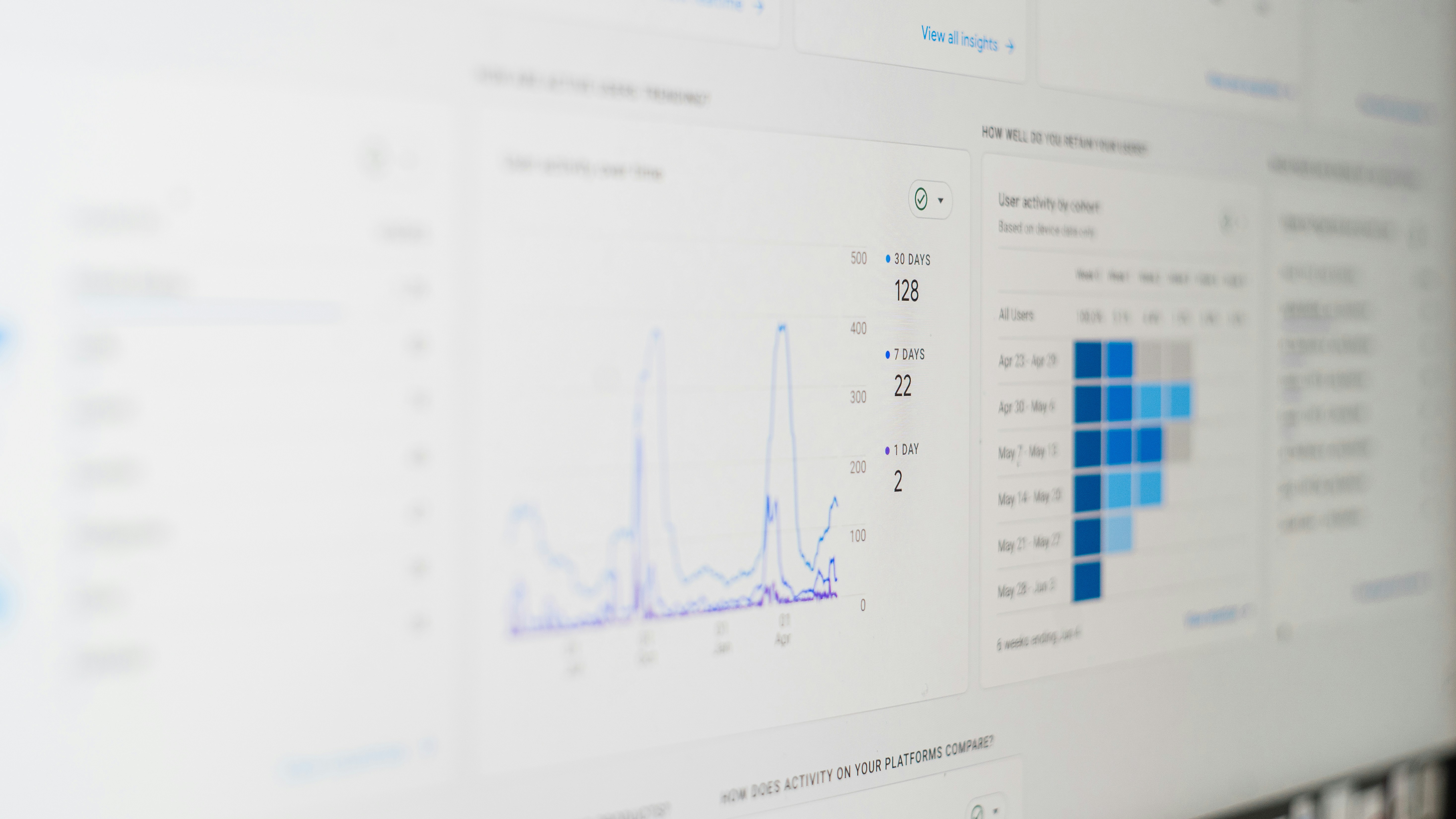
Enterprise analytics dashboards provide real-time visibility into operational performance, enabling data-driven decision-making across departments and organizational levels.
SAP in Manufacturing and Logistics
In our manufacturing and logistics projects, we frequently work with SAP — one of the most widely adopted enterprise platforms in the world. We help companies use SAP to coordinate production planning, manage warehouse operations, and synchronize global supply chains. Its modular architecture allows our clients to implement only the components they need, and we guide them through scaling their digital infrastructure in step with business growth.
Salesforce for Sales and Marketing Automation
We have extensive experience integrating and customizing Salesforce, the leading cloud-based CRM platform. Our teams connect Salesforce with internal systems so sales departments can manage leads, track deals, and forecast revenue, while marketing teams design, execute, and measure multi-channel campaigns. We leverage its extensive marketplace of third-party integrations to build highly extensible hubs for our clients' customer-facing operations.
Oracle Database and Middleware Solutions
Our engineers work with Oracle's enterprise-grade database management and middleware solutions to power mission-critical applications. We turn to Oracle when our clients need high-performance data storage, transaction processing, and application integration. Its middleware layer enables the seamless communication between disparate systems that we architect for enterprises with complex, heterogeneous IT environments.
AWS Enterprise Cloud Solutions
We build on Amazon Web Services (AWS) to deliver scalable cloud infrastructure and platform services tailored for enterprise workloads. From compute and storage to machine learning and IoT services, we use AWS to help organizations deploy and manage applications without the overhead of maintaining physical data centers. We find its pay-as-you-go model and global reach particularly compelling for clients pursuing digital transformation.
Cross-Industry Integration and System Design
In practice, most of our clients do not rely on a single platform. We integrate multiple best-of-breed solutions into cohesive systems — combining an ERP for inventory, a CRM for customer engagement, and a BI platform for analytics, all connected through middleware and APIs. Our system design and software configuration planning ensure these components work together reliably and deliver a unified experience.
Differences Between Enterprise and Regular Software Development
Enterprise software development differs from regular software development in scope, complexity, and stakeholder involvement. Enterprise projects typically support large organizations, require integration with multiple legacy systems, enforce strict security and compliance standards, and involve cross-departmental decision-making, longer timelines, and formal governance processes. In contrast, regular (consumer or small-business) software is scoped for individual users or small teams, with shorter development cycles, fewer integration points, and limited regulatory requirements. Understanding this distinction is central to how we approach project planning, architecture, and team composition for each engagement we take on.
Scale, Complexity, and User Base
In our work, we see clearly how enterprise software differs from standard products. Enterprise systems must support thousands of concurrent users, process massive datasets, and operate reliably around the clock. Standard software typically targets individuals or small teams with far simpler requirements. We approach this difference in scale as a factor that shapes every aspect of our development process, from architecture decisions to testing strategies.
Business Domain Depth and Customization
While consumer applications aim for broad appeal and simplicity, the enterprise systems we build must model intricate business domains with precision. We invest heavily in customization to reflect each client's unique organizational workflows, compliance requirements, and industry-specific logic. This deep domain alignment means our development teams work closely with subject-matter experts throughout the entire project lifecycle.
Data Integration and Documentation Requirements
The enterprise environments we work in typically involve dozens of data sources — legacy databases, third-party APIs, cloud services, and on-premise systems — all of which must be integrated seamlessly. We treat rigorous data documentation not as optional but as a prerequisite for maintainability, auditability, and regulatory compliance. Standard software projects rarely face integration challenges of comparable breadth or depth.
Enterprise Software Stacks and Middleware
The technology stacks we use in enterprise development are notably more complex than those in conventional projects. They often include middleware layers, message brokers, service buses, and enterprise application servers that facilitate communication between distributed components. Our engineers bring the specialized expertise required to master these stacks — capabilities that go well beyond typical web or mobile development.
Cloud-Based and Hybrid Development Models
We increasingly embrace cloud-based and hybrid architectures that blend on-premise infrastructure with public and private cloud services. This shift introduces considerations around latency, data residency, multi-tenancy, and vendor lock-in that we navigate carefully for each client. Our architectural choices always account for both current demand and future growth trajectories.

Cross-functional collaboration between business stakeholders and development teams is essential for aligning enterprise software with organizational objectives and real-world operational needs.
Benefits of Enterprise Software and Applications
Enterprise software and applications enable organizations to centralize operations, standardize processes, and gain real-time visibility across departments. They improve efficiency through automation, reduce manual errors, and support data-driven decision-making at scale. Additionally, enterprise systems enhance security, compliance, and scalability, allowing businesses to grow while maintaining operational control and governance.

Well-structured enterprise development teams combine domain expertise with technical depth to deliver platforms that drive operational efficiency and support long-term business growth.
Operational Efficiency and Process Automation
One of the most immediate benefits we deliver through enterprise software is the automation of repetitive, time-consuming tasks. By replacing manual data entry, paper-based approvals, and fragmented spreadsheets with streamlined digital workflows, we help organizations dramatically reduce operational overhead. Our clients' employees spend less time on administrative work and more time on activities that directly contribute to business value.
Scalability and Long-Term Growth
We engineer enterprise platforms to grow alongside the organizations they serve. Whether a company expands into new markets, acquires a competitor, or experiences a sudden spike in demand, the software we build can scale horizontally and vertically without requiring a complete rebuild. This inherent scalability protects our clients' technology investment and supports their long-term strategic planning.
Real-Time Data and Informed Decision-Making
The enterprise systems we deliver provide leadership with access to real-time organizational data, enabling faster and more accurate decision-making. Instead of waiting for monthly reports or reconciling conflicting spreadsheets, our clients' executives monitor key metrics through live dashboards and receive automated alerts when thresholds are breached. We believe this data-driven culture gives organizations a significant competitive advantage.
Enhanced Customer Satisfaction and Retention
By integrating CRM, supply chain, and support systems, we enable organizations to deliver a seamless and personalized customer experience. Orders are fulfilled faster, inquiries are resolved more efficiently, and marketing messages become more relevant. In our experience, the cumulative effect is higher customer satisfaction, stronger loyalty, and improved lifetime value.
Cross-Departmental Collaboration and Data Integration
The enterprise platforms we build break down departmental silos by creating a shared data foundation that all teams can access and contribute to. Finance, operations, sales, and HR work from a single source of truth, reducing miscommunication and enabling cross-functional collaboration. We see this integration foster organizational alignment and ensure that every department works toward common goals with consistent information.
Challenges in Enterprise Software Development
Enterprise software development presents significant challenges due to its scale, complexity, and organizational impact. Projects often require integration with legacy systems, alignment across multiple stakeholders, strict security and regulatory compliance, and management of large volumes of data. Long development cycles, evolving business requirements, change resistance within teams, and high expectations around reliability, scalability, and performance further increase delivery risk. Our approach to these challenges is grounded in disciplined engineering practices, experienced project governance, and a strong focus on stakeholder communication throughout every phase of a project.

Enterprise development teams coordinate across multiple disciplines to manage complexity, mitigate delivery risk, and ensure quality throughout the full project lifecycle.
Security Concerns and Compliance Requirements
We know that enterprise systems handle sensitive financial, personal, and proprietary data, making them high-value targets for cyberattacks. Our teams implement robust authentication and authorization controls, encrypt data at rest and in transit, and ensure compliance with industry-specific regulations such as GDPR, HIPAA, and SOX. Balancing stringent security with usability is one of the challenges we address with particular care in every project.
Scalability and Performance Under Load
While scalability is a core benefit of enterprise software, achieving it in practice is something we take very seriously. Systems must maintain consistent performance as user counts grow, data volumes increase, and new modules are added. We proactively address risks such as poorly optimized queries, insufficient caching strategies, and tightly coupled architectures that can lead to degraded performance and costly downtime.
Third-Party Integration and Compatibility Issues
Most enterprise ecosystems we work with rely on a mix of in-house, commercial, and open-source components that must function together seamlessly. We manage the risks that come with third-party integration — API versioning, data format mismatches, and vendor dependency. Resolving compatibility issues between legacy systems and modern platforms is a challenge our engineers handle routinely.
Changing Business Requirements and Scope Creep
Enterprise projects often span months or years, during which business priorities, market conditions, and regulatory landscapes can shift substantially. We manage changing requirements through disciplined change management processes and flexible architectural foundations. In our experience, scope creep remains one of the leading causes of project failure, which is why we invest heavily in governance from day one.
User Experience and Organizational Adoption
We understand that even the most technically sophisticated system will fail if end users resist adopting it. Complex interfaces, inadequate training, and disruption to established workflows can generate significant friction. That is why we invest in user experience design and comprehensive training programs to ensure the software we deliver achieves its intended value across the entire organization.
Enterprise Software Development Process
Enterprise software development follows a structured, multi-phase process designed to manage complexity, risk, and cross-functional alignment. It typically begins with discovery and requirements analysis, where business objectives, technical constraints, compliance needs, and integration points are clearly defined.
The next stages include solution architecture and system design, followed by iterative development, rigorous quality assurance, security validation, and performance testing. Given the scale of enterprise systems, integration testing and data migration planning are critical components of this phase.
After deployment, organizations enter a stabilization or "hypercare" period, then transition into ongoing support, monitoring, optimization, and continuous improvement to ensure the system evolves alongside business needs and regulatory changes.

Enterprise software development follows a structured lifecycle — from discovery and architecture through iterative delivery, testing, and continuous improvement aligned with evolving business needs.
Requirements Engineering and Stakeholder Collaboration
Our development process begins with a thorough requirements engineering phase. Our business analysts, domain experts, and technical architects work together with the client to define exactly what the system must do. We know that stakeholder collaboration is critical at this stage — misaligned expectations or incomplete requirements are among the most expensive problems to fix later. Our deliverables at this phase include functional specifications, data models, and regulatory compliance checklists that serve as the foundation for every subsequent phase of development.
Architecture Design and Integration Planning
Once requirements are established, our team designs the software architecture, selecting appropriate patterns such as microservices or service-oriented architectures based on scalability, maintainability, and integration needs. We pay particular attention to enterprise application integration architecture — how the new system will communicate with existing platforms, legacy modules, and external services. We know that decisions made at this stage have a profound and lasting impact on the system's flexibility, performance, and total cost of ownership.
Front-End and Back-End Development
Our development proceeds in parallel across front-end and back-end tracks. Our front-end developers build intuitive, accessible interfaces guided by UX and UI design principles, while our back-end engineers implement business logic, data processing pipelines, and API layers. In every enterprise project, both tracks account for high concurrency, role-based access controls, and integration with middleware and database systems.
Testing, Quality Assurance, and ETL Validation
We hold ourselves to rigorous testing standards across multiple dimensions: unit tests, integration tests, performance tests, security audits, and user acceptance testing. ETL testing is particularly important in the data-intensive environments we work in, ensuring that information flows accurately between systems. Our automated test suites and continuous integration pipelines help us maintain quality as the codebase evolves.
Deployment, Iteration, and Continuous Improvement
Deployment at Craftsoft is a carefully orchestrated process involving staging environments, rollback plans, and phased rollouts. But for us, the process does not end at launch. We embrace iterative improvement — gathering feedback, monitoring performance, and releasing incremental updates on a regular cadence. This continuous cycle of deployment, observation, and refinement ensures the software we deliver remains aligned with our clients' evolving business needs.
Best Practices and Methodologies
Successful enterprise software development relies on clearly defined governance, strong stakeholder alignment, and disciplined scope management. Establishing measurable business objectives, documenting requirements thoroughly, and maintaining executive sponsorship help prevent scope drift and ensure long-term strategic alignment.
Methodologically, many organizations adopt Agile or hybrid Agile-Waterfall approaches to balance flexibility with enterprise-level control. Agile frameworks such as Scrum or SAFe enable iterative delivery and faster feedback loops, while structured phase gates ensure compliance, security validation, and architectural integrity.
Best practices also include modular system architecture, robust DevOps and CI/CD pipelines, automated testing, proactive risk management, and comprehensive documentation. Prioritizing security-by-design, scalability planning, and change management ensures the solution remains resilient, adaptable, and aligned with evolving enterprise needs.
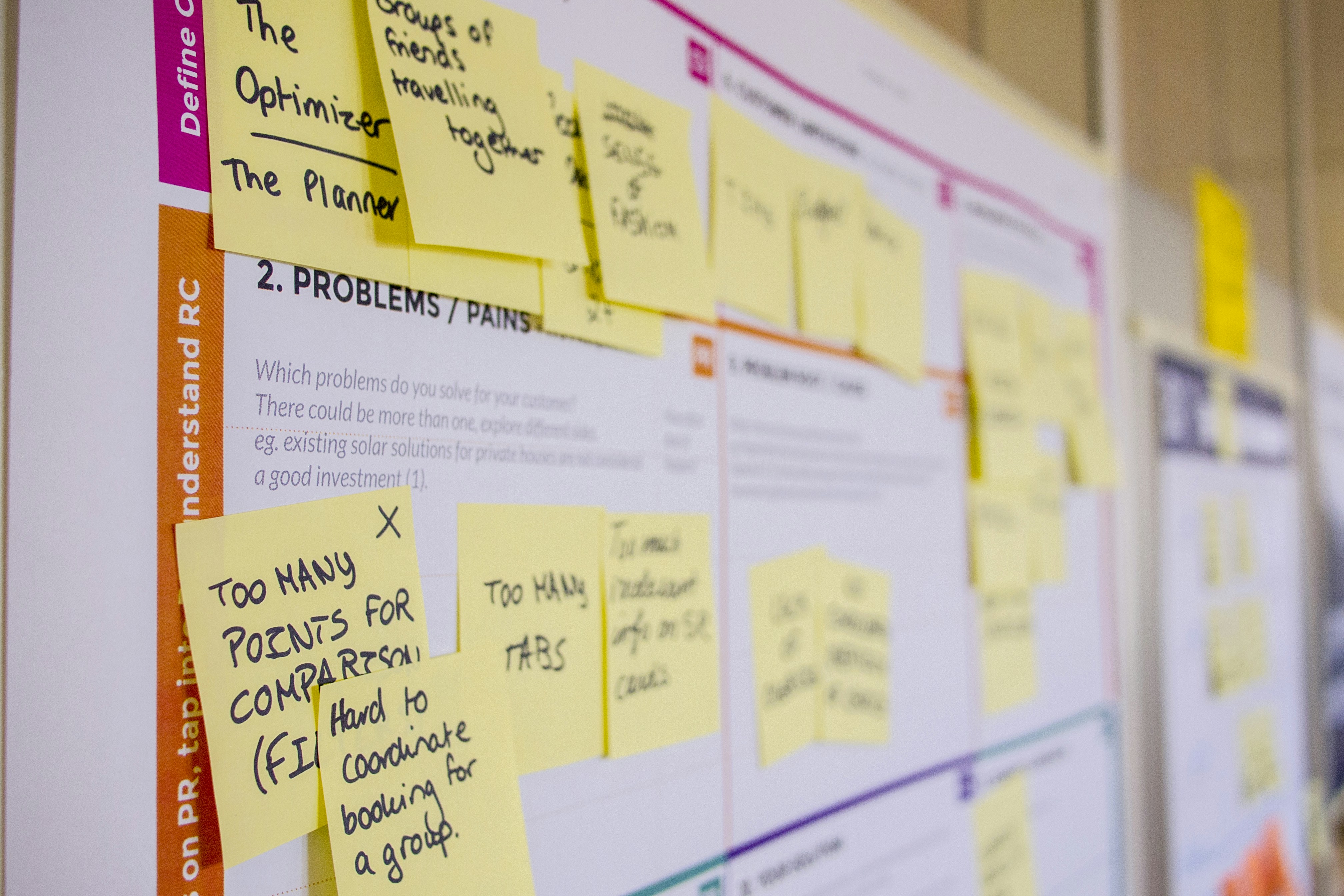
Structured requirement mapping and collaborative planning sessions ensure that enterprise software initiatives remain aligned with business priorities and stakeholder expectations throughout delivery.
Establishing Strong Data Governance and Quality Standards
We treat data as the lifeblood of enterprise software and protect its integrity from day one. Our teams establish clear data governance policies — including ownership, access controls, validation rules, and retention schedules — to ensure information remains accurate, consistent, and compliant. We have seen firsthand how high data quality reduces downstream errors, improves analytics reliability, and builds trust in the system.
Designing for Maintainability and Long-Term Evolution
We build enterprise software to remain viable for years or even decades, making maintainability a first-class design concern in every project. Clean code practices, well-defined data models, modular architecture, and comprehensive documentation are standards we uphold across all our teams. We know that short-term shortcuts almost always result in higher total cost of ownership for our clients.
Incorporating Cross-Departmental Feedback Loops
We shape our enterprise systems through continuous input from the people who use them. By establishing regular cross-departmental feedback loops, we ensure that development priorities reflect real operational needs rather than assumptions. This collaborative approach increases adoption, surfaces usability issues early, and helps our product teams make informed trade-off decisions throughout the development cycle.
Ensuring Accessibility Across Environments
We design for both on-site and remote accessibility, recognizing that modern enterprise users expect to access their tools from a variety of devices and locations. Our solutions include responsive interfaces, secure VPN or zero-trust access, and offline-capable features that support hybrid work models. We view accessibility not as a convenience but as a direct driver of productivity and employee satisfaction.
Committing to Continuous Maintenance and Application Optimization
For us, launching an enterprise application is the beginning of a long-term commitment, not the end of a project. We provide continuous software maintenance and support — including bug fixes, security patches, performance tuning, and feature enhancements — to keep systems healthy and relevant. Application optimization is an ongoing discipline we drive through monitoring data, user feedback, and evolving business requirements.
Team Structure in Enterprise Projects
Enterprise projects require a multidisciplinary team structure designed to manage complexity, scale, and organizational impact. At the strategic level, executive sponsors and steering committees provide governance, budget oversight, and alignment with business objectives. Product owners and business analysts translate enterprise requirements into structured backlogs and functional specifications.
On the delivery side, solution architects define system architecture and integration strategy, while engineering teams (frontend, backend, DevOps, data, and QA) execute development and ensure quality, security, and performance. Project managers or program managers coordinate timelines, dependencies, and risk management across multiple workstreams.
Supporting roles such as security specialists, compliance officers, UX designers, change management leads, and post-deployment support teams ensure regulatory alignment, user adoption, and long-term operational stability. This layered structure enables enterprise initiatives to maintain control, scalability, and accountability throughout the project lifecycle.

Enterprise project teams bring together specialists across strategy, engineering, QA, and operations to manage the full complexity of large-scale software delivery.
Project Manager and Business Analyst
Every Craftsoft project is led by an experienced project manager responsible for planning, coordinating, and delivering on time and within budget. Our project managers handle stakeholder expectations, mitigate risks, and keep development aligned with strategic objectives. Working alongside them, our business analysts serve as the bridge between business stakeholders and the technical team, translating organizational needs into clear, actionable requirements.
System Architect and Domain Experts
Our system architects define the high-level technical blueprint for each application, making critical decisions about technology stacks, integration patterns, and scalability strategies. We pair them with domain experts who bring deep knowledge of the specific industry or business function the software serves. Together, they ensure our architecture is not only technically sound but also faithfully represents the complexity and nuance of the business domain.
Front-End and Back-End Developers
Our front-end developers craft user-facing interfaces focused on usability, responsiveness, and visual consistency across devices. Our back-end developers build the server-side logic, APIs, and data access layers that power core functionality. In every enterprise project, both teams bring a strong understanding of security best practices, performance optimization, and integration with enterprise middleware and databases.
QA Engineers, DevOps Engineers, and Database Developers
Our QA engineers design and execute test strategies that catch defects before they reach production, covering functional, performance, and regression testing. Our DevOps engineers build and maintain CI/CD pipelines, infrastructure-as-code, and monitoring systems for rapid, reliable deployments. Meanwhile, our database developers design and optimize the data storage layer, ensuring schemas, queries, and indexing strategies support the application's performance and integrity requirements.
Cybersecurity Engineers, UX/UI Designers, and Regulatory Consultants
Our cybersecurity engineers embed security into every layer of the application, from network defenses to code-level vulnerability scanning. Our UX and UI designers ensure that complex enterprise workflows are presented through intuitive, efficient interfaces that minimize training overhead. When needed, we bring in regulatory consultants who provide guidance on legal and compliance obligations, helping our clients navigate industry-specific requirements and avoid costly violations.

UX and UI design are integral to enterprise software delivery — intuitive interfaces reduce training overhead and drive adoption across large, distributed user bases.
Technologies and Tools for Enterprise Development
Enterprise development relies on a broad ecosystem of technologies designed to support scalability, security, integration, and long-term maintainability. On the backend, organizations commonly use frameworks such as Spring Boot, .NET, and Node.js, along with enterprise-grade databases like PostgreSQL, Oracle, and Microsoft SQL Server.
For frontend development, teams often adopt React, Angular, or Vue to build scalable, component-based interfaces. DevOps and infrastructure tools — including Docker, Kubernetes, Jenkins, GitHub Actions, and cloud platforms like AWS, Azure, or Google Cloud — enable automated deployments, containerization, and resilient cloud-native architectures.
Additional enterprise tools include API management platforms, identity and access management systems, observability stacks (such as monitoring and logging solutions), data warehouses, and business intelligence platforms. Together, these technologies form a cohesive foundation that supports secure integrations, high availability, compliance, and enterprise-level performance requirements.

Modern enterprise development environments leverage cloud-native tooling, DevOps automation, and integrated platforms to maintain delivery velocity and software quality at scale.
Programming Languages and Development Platforms
We build enterprise applications using mature, widely supported languages such as Java, C#, Python, and TypeScript. These offer strong ecosystems, extensive libraries, and enterprise-grade frameworks — including Spring Boot, .NET, and Django — that accelerate our development while enforcing architectural best practices. We select the right language and platform for each project based on performance needs, team expertise, and integration requirements.
Cloud Platforms and Development Environments
Cloud-based development environments are our standard, offering scalable infrastructure, managed services, and global availability. We work across all major providers — AWS, Microsoft Azure, and Google Cloud — selecting the best fit for each client's workload. Our cloud-native development practices, including containerization and serverless architectures, further reduce operational complexity and accelerate time to market.
CI/CD Pipelines, Version Control, and Collaboration Tools
We rely on continuous integration and continuous delivery tools such as Jenkins, GitHub Actions, and GitLab CI to automate our build, test, and deployment pipelines. GitHub Enterprise provides our teams with secure, centralized version control alongside code review, project management, and collaboration features. These tools form the operational backbone of every enterprise development workflow we run.
Bug Tracking, Performance Analysis, and Code Quality Tools
We maintain robust tooling for identifying and resolving issues across all our projects. Platforms like Jira and Azure DevOps help our teams prioritize defects and manage backlogs. We use performance analyzers and profiling tools to identify bottlenecks under realistic load conditions, and static analysis tools to enforce coding standards and catch potential vulnerabilities before they reach production.
AI, Machine Learning, IoT, and Emerging Technologies
We increasingly embed artificial intelligence and machine learning into the enterprise applications we build, powering capabilities such as demand forecasting, anomaly detection, intelligent document processing, and personalized recommendations. Our IoT solutions extend enterprise systems to physical environments, enabling real-time monitoring of equipment, logistics, and facilities. We help our clients embrace these emerging technologies through deliberate digital transformation strategies that integrate new capabilities without disrupting established operations.
Cost and Sourcing Models
Enterprise software projects vary significantly in cost depending on scope, architecture complexity, regulatory requirements, and team composition. Major cost drivers include discovery and planning, solution architecture, engineering effort, quality assurance, DevOps infrastructure, data migration, security compliance, and post-deployment support. In large-scale enterprise environments, integration with legacy systems and cross-functional coordination often represent a substantial portion of total project investment.
From a sourcing perspective, organizations typically choose between in-house teams, staff augmentation, dedicated development teams, or full project outsourcing. Each model balances control, flexibility, expertise access, and cost efficiency differently. Enterprises may also adopt hybrid models — combining internal leadership and architecture with external engineering capacity — to maintain strategic oversight while optimizing delivery velocity and cost structure.

Accurate cost estimation for enterprise software requires mapping all workstreams — from architecture and development to integration, testing, and ongoing maintenance.
Financial Planning and Budget Estimation
We consider accurate financial planning the foundation of every successful enterprise software initiative. Our cost estimation accounts for development, infrastructure, licensing, testing, training, and ongoing maintenance. We know that underestimating any of these components leads to budget shortfalls and delays, so we use historical benchmarks, expert judgment, and iterative refinement to produce realistic, defensible forecasts for our clients.
Architectural and Technology Choices That Influence Cost
We guide our clients through the architectural and technology choices that have a significant, lasting impact on total cost. Selecting a monolithic versus microservices architecture, choosing between open-source and commercial platforms, and deciding on cloud versus on-premise hosting all carry different cost profiles. We evaluate these decisions not only by upfront investment but also through the lens of long-term operational and scaling costs.
In-House Development vs. Outsourced Consultancy
We work with organizations to determine the optimal sourcing strategy — whether building with an in-house team, engaging our consultancy, or adopting a hybrid model. In-house teams offer deeper institutional knowledge, while our teams provide specialized expertise, faster ramp-up, and greater flexibility. We help each client find the right balance based on project complexity, timeline, budget, and existing technical capabilities.
Managing Change Requests and Scope-Driven Cost Overruns
We recognize that change requests are inevitable in long-running enterprise projects, and each one carries cost implications. Without disciplined processes, scope creep can drive significant cost overruns. That is why we establish clear governance around change evaluation — including impact analysis, prioritization criteria, and stakeholder approval workflows — to help our clients absorb necessary changes without losing financial control.
Aligning IT Budgets with Business Strategy
We believe enterprise software investment must ultimately be justified by its contribution to business strategy. We help our clients frame IT budgets not as pure cost centers but as strategic enablers of efficiency, growth, and competitive differentiation. By linking development spending to measurable business outcomes — revenue growth, cost reduction, or customer satisfaction improvement — we ensure that every dollar invested delivers tangible, accountable value.
FAQ
What is enterprise software development?+
Enterprise software development is the process of designing, building, and maintaining large-scale applications that support and automate core business processes across an entire organization. Unlike consumer-grade tools, enterprise systems are built to handle complex workflows, manage vast volumes of data, and serve hundreds or thousands of users simultaneously. They act as the digital backbone of modern companies, connecting departments, standardizing operations, and enabling data-driven decision-making at every level.
What are the most common types of enterprise software?+
The most common types include Enterprise Resource Planning (ERP), which integrates finance, HR, supply chain, and operations; Customer Relationship Management (CRM), which manages customer interactions and sales pipelines; Supply Chain Management (SCM), which coordinates procurement, logistics, and inventory; Business Intelligence (BI) and analytics platforms; and Human Capital Management (HCM) systems for workforce planning and payroll. Organizations often deploy several of these systems and integrate them into a unified ecosystem.
How is enterprise software different from regular business software?+
Enterprise software differs from regular business software in scale, complexity, and organizational scope. Enterprise systems serve entire organizations — often globally — and must support thousands of concurrent users, integrate with multiple internal and external platforms, comply with strict regulatory requirements, and maintain high availability under heavy load. Regular business software typically serves a single department or function, requires less customization, and operates with fewer integration dependencies. Enterprise development also demands longer planning cycles, dedicated governance structures, and multidisciplinary teams.
What are the biggest challenges in enterprise software development?+
The most significant challenges include integration with legacy systems, alignment across multiple stakeholders, strict security and regulatory compliance, and management of large data volumes. Long development cycles, evolving business requirements, scope creep, and organizational resistance to change further increase delivery risk. Achieving scalability and performance under real-world load, managing third-party compatibility issues, and driving user adoption across the entire organization are also common pain points that require disciplined engineering and governance throughout the project.
How much does enterprise software development cost?+
Enterprise software costs vary significantly depending on scope, architecture complexity, regulatory requirements, and team composition. Major cost drivers include discovery and planning, solution architecture, engineering effort, quality assurance, DevOps infrastructure, data migration, security compliance, and post-deployment support. Integration with legacy systems and cross-functional coordination often represent a substantial portion of total investment. Architectural choices — such as microservices versus monolithic architecture or cloud versus on-premise hosting — also have a lasting impact on total cost of ownership.
What technologies are used in enterprise software development?+
Enterprise development relies on a broad ecosystem of technologies. Backend systems are commonly built with Java, C#, Python, or TypeScript using frameworks such as Spring Boot, .NET, and Django, paired with enterprise-grade databases like PostgreSQL, Oracle, and Microsoft SQL Server. Frontend teams often use React, Angular, or Vue for scalable interfaces. DevOps tooling includes Docker, Kubernetes, Jenkins, and GitHub Actions. Cloud platforms — AWS, Microsoft Azure, and Google Cloud — provide the infrastructure backbone, while AI, machine learning, and IoT integrations are increasingly embedded to deliver intelligent, real-time capabilities.
What team is needed to build enterprise software?+
Enterprise projects require a multidisciplinary team that spans strategy, architecture, engineering, and operations. At minimum, a capable team includes a project manager, business analyst, solution architect, front-end and back-end developers, QA engineers, DevOps engineers, and database developers. Larger or more complex projects also involve cybersecurity engineers, UX/UI designers, data engineers, and regulatory consultants. Executive sponsorship and steering committee oversight are essential at the organizational level to maintain governance, resolve cross-departmental dependencies, and ensure strategic alignment throughout the project lifecycle.